A Practical Guide to Chatbots in Marketing
Chatbots in marketing are essentially your website's best employee. Think of them as AI-powered assistants working 24/7 to talk with visitors, answer their questions, and gently guide them toward making a purchase. They are the digital equivalent of a friendly, knowledgeable sales rep who never sleeps.
The Rise of Conversational Marketing
Imagine your website is a physical store. Without a chatbot, it's like an empty shop. People walk in, look around, but often leave because there's no one there to help them.
Now, picture that same store with a sharp, helpful assistant ready to greet every person who walks in, day or night. That’s exactly what a chatbot does for your website. This fundamental shift from talking at your audience to talking with them is the whole idea behind conversational marketing.
It's about more than just setting up automated replies. It’s about building a better, smoother journey for your customers. Instead of forcing visitors to fill out static forms or dig through FAQ pages, marketers are now using real-time, dynamic conversations to build relationships from the very first click.
Why This Shift Is Happening Now
This move is happening for two big reasons: customer expectations have changed, and the technology has finally caught up. Modern consumers want answers now. They aren’t willing to wait 24 hours for an email response or hunt for information. They expect instant, personalized help, and chatbots are the perfect tool to provide it.
This demand has fueled an explosion in the market. Back in 2021, the global chatbot market was valued at around $2.47 billion. By 2024, it rocketed to an estimated $15.57 billion. Looking ahead, experts predict the market will hit a staggering $46.64 billion by 2029, which tells you everything you need to know about where things are headed.
From Static Pages to Dynamic Conversations
For a long time, marketing was a one-way street. Companies would push out ads and content, hoping something would stick. A conversational approach flips that model on its head by pulling customers into a dialogue. The benefits are pretty clear:
- Immediate Engagement: You can greet visitors the second they land on your site, which helps lower bounce rates and keeps them around longer.
- 24/7 Availability: Your business can capture leads and offer support around the clock. Time zones and office hours no longer matter.
- Personalized Experiences: The chatbot can offer recommendations and answers based on what a visitor is doing, making them feel seen and understood.
The core idea is simple: marketing should feel like a helpful conversation, not a one-sided announcement. By meeting customers where they are with instant, relevant interactions, you create a frictionless path from interest to conversion.
To give you a clearer picture of the real-world impact, here’s a quick look at some key numbers.
Chatbot Marketing Impact at a Glance
The statistics below highlight just how effective chatbots can be for businesses looking to improve engagement, support, and sales.
| Metric | Statistic | Business Impact |
|---|---|---|
| Lead Generation | Businesses see an average 67% increase in leads. | More qualified leads enter the sales funnel without extra effort. |
| Response Time | Chatbots can reduce first response time by 99%. | Customers get instant answers, leading to higher satisfaction. |
| Cost Savings | Can cut operational costs by up to 30%. | Frees up human agents to focus on more complex, high-value tasks. |
| User Engagement | Chatbot conversations can have an 80-90% response rate. | Visitors are more likely to interact, providing valuable data and insights. |
These figures show that chatbots aren't just a novelty; they deliver tangible results that directly affect the bottom line.
Ultimately, using chatbots in marketing isn't just another trend—it's a fundamental change in how businesses connect with people. To get a better sense of how it all comes together, feel free to revolutionize your business with AI chatbots. This strategy turns passive visitors into active participants, driving real growth for your business.
How Chatbots Drive Your Marketing Funnel
It’s easy to pigeonhole chatbots as simple support tools, but that’s selling them way short. Think of them as your marketing funnel's secret weapon—proactive engines built to guide people from casual curiosity all the way to a confident purchase.
Forget the old, static model of a marketing funnel. A chatbot turns it into a living, breathing conversation. It acts as a personal guide for every single visitor, engaging them at just the right moments to build a real connection and drive conversions, 24/7. It transforms passive browsing into an active dialogue.
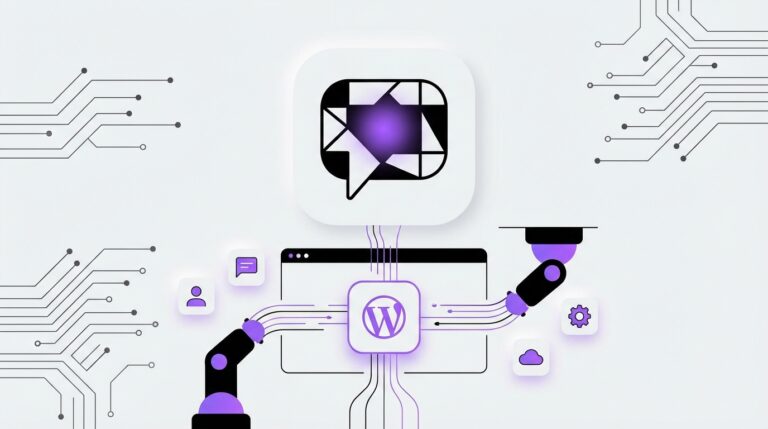
This diagram shows you exactly what that looks like. The chatbot isn't just a feature; it's the central bridge connecting what your customer wants with what your business offers.
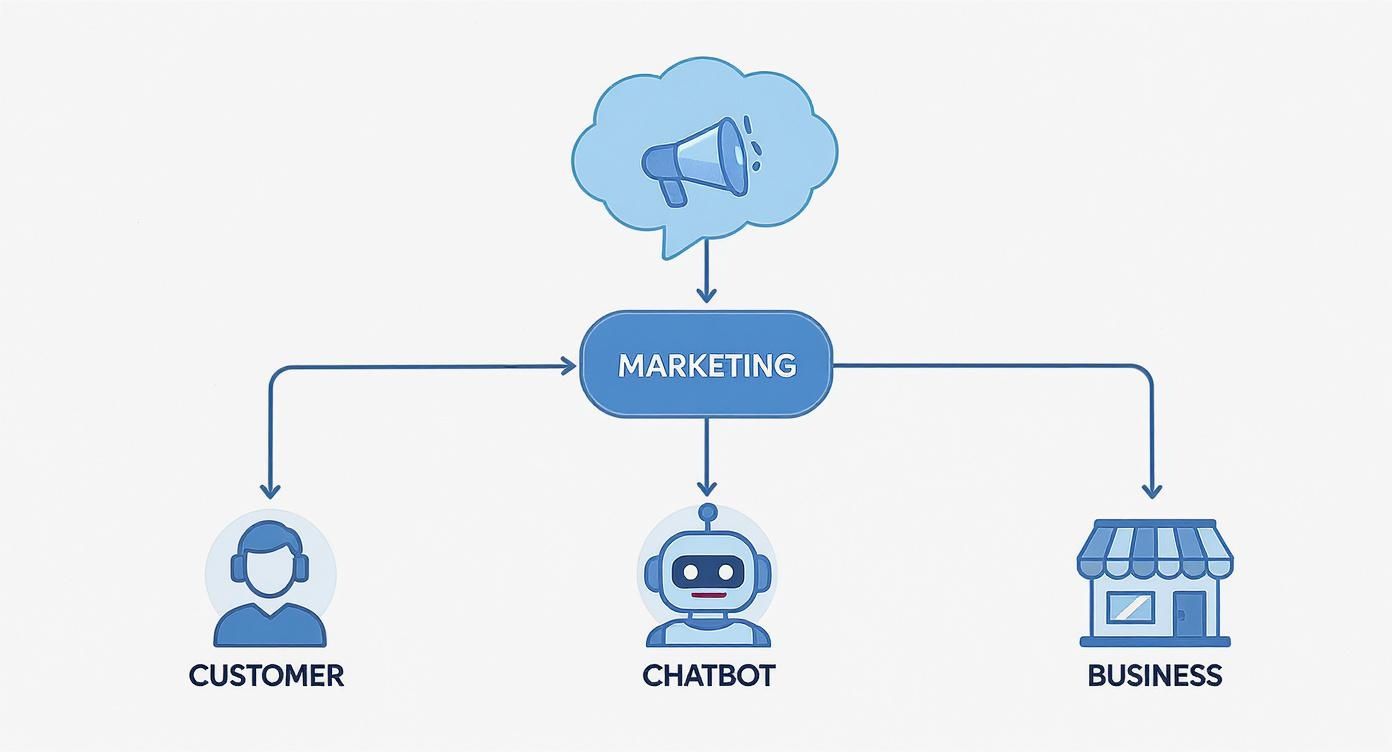
As you can see, the chatbot becomes the main hub for communication, creating a smooth, two-way street where both the customer and the business get what they need.
Automated Lead Capture and Qualification
One of the biggest wins with chatbots is how they handle lead generation. When someone new lands on your site, instead of forcing them to fill out a clunky form, a chatbot can pop up with a friendly "hello." This immediate interaction is far more inviting and helps keep them from bouncing off the page.
From there, the chatbot can ask a few smart, targeted questions in a totally natural way. Based on the answers, it can figure out if that visitor is a good fit for your services. This means your sales team stops wasting time on dead-end leads and gets to focus only on people who are genuinely interested and ready to talk. If you want to go deeper on this, check out our guide on how to use AI for lead generation.
Instant and Scalable Customer Support
Today’s customers don’t wait. They want answers now. A chatbot delivers exactly that, providing instant, around-the-clock help for all the common questions about shipping, product specs, or return policies.
This frees up your human support agents to tackle the tricky, high-stakes problems that actually require their expertise.
A well-trained chatbot can handle up to 80% of routine customer questions on its own. This doesn't just cut down on operational costs; it makes your customers happier. A quick, helpful answer is often what convinces someone to stick around.
This kind of on-demand assistance builds a ton of trust and shows people that your brand is reliable and puts customers first—a critical piece for long-term loyalty.
Personalized Product Recommendations
Imagine having a dedicated personal shopper for every single person who visits your e-commerce store. That's essentially what a recommendation chatbot provides. By asking about a visitor's tastes, needs, and budget, the bot can serve up a curated list of products that are a perfect match.
This is so much more powerful than just showing a generic "related products" carousel. A chatbot can:
- Help confused shoppers: If someone isn't sure what they want, the bot can ask questions to narrow down the options and prevent them from feeling overwhelmed.
- Cross-sell and upsell intelligently: Based on what’s already in the cart, the bot can suggest a complementary accessory or a premium upgrade that makes sense.
- Create a tailored journey: The whole interaction feels personal and understood, which dramatically increases the odds of a sale.
Proactive User Engagement and Conversions
Good chatbots don't just sit around waiting to be asked a question. They can be programmed to jump into action to achieve specific marketing goals. For example, a chatbot can offer a special discount to someone who’s been staring at a product page for a while, giving them that final nudge to buy.
This proactive outreach is incredibly effective at the bottom of the funnel. A chatbot can send a friendly reminder about an abandoned cart, run a fun quiz to boost brand awareness, or even hand out exclusive deals. A great real-world example is how Blockbee's Telegram Bots Coupon System uses automated messages to deliver offers that spark immediate sales.
By starting these conversations at the perfect time, chatbots turn missed opportunities into closed deals.
Measuring Your Chatbot's Performance and ROI
https://www.youtube.com/embed/H-xQZz-RbHI
So, you’ve launched your chatbot. That’s a fantastic start, but the real question is: is it actually doing its job? Just having a bot on your site isn't the finish line. You need to know if it's delivering a real, measurable return on your investment.
To figure that out, you have to look past the vanity metrics and dig into the key performance indicators (KPIs) that tell the true story.
Think of your chatbot like a new team member. You wouldn’t just assume they’re performing well; you’d set clear goals and track their progress. It’s the exact same principle here. Measuring performance shows you what’s working, pinpoints what needs fixing, and helps you build a rock-solid case for conversational marketing.
This data-first mindset is what turns a chatbot from a cool website gadget into a powerful marketing engine that directly impacts your bottom line.
First Things First: Are People Actually Talking to It?
Before you even think about ROI or conversions, you need to answer a simple question: are people using the chatbot? Engagement metrics are your frontline report, telling you how well your bot starts and holds a conversation.
Here are the basics you should be watching:
- Total Users: This is your starting point—the total count of unique visitors who have chatted with your bot. It gives you a sense of your bot's overall reach.
- Interaction Rate: What percentage of your website visitors actually click to start a chat? If this number is low, it could be a sign that your chat widget isn't visible enough or your welcome message isn't grabbing attention.
- Conversation Length: How many messages are exchanged in a typical chat session? Longer, more detailed conversations often signal that users are genuinely engaged and find the bot helpful.
Keeping a close eye on these numbers helps you tweak that all-important first impression. You can test out different welcome prompts or change the widget's appearance to encourage more visitors to say hello.
From Chit-Chat to Conversions: Tracking Your Goals
Once you know people are engaging, it's time to see if those conversations are leading anywhere. This is where your chatbot proves its worth by actively contributing to your marketing goals and, ultimately, your revenue.
A great chatbot doesn't just sit there waiting for questions. It guides visitors toward a specific outcome, whether that's qualifying a lead, booking a demo, or capturing an email address. It turns a passive browser into an active prospect.
The crucial metrics here are the Lead Qualification Rate (what percentage of chats produce a sales-ready lead?) and the Goal Completion Rate (how often do users finish a key action, like signing up for a webinar?). Tracking these metrics ties your chatbot's activity directly to business growth. You can dive deeper into this by exploring key customer experience metrics that define the customer journey.
Calculating the Real Return on Your Investment
Finally, you need to connect all these performance dots back to a clear financial picture. Calculating ROI means looking at both the money you're making and the money you're saving.
The numbers don't lie. Companies frequently report an ROI anywhere from 148% to 200%, with some saving over $300,000 annually. You can discover more insights about AI chatbot statistics to see the potential. This value comes from automating tasks that would otherwise fall to your team, like handling routine support tickets or pre-qualifying sales leads.
To get a complete picture, it's helpful to organize your KPIs.
Essential KPIs for Chatbot Marketing Performance
This table breaks down the most important metrics you should be tracking to understand your chatbot's impact from every angle.
| KPI Category | Metric Example | What It Measures |
|---|---|---|
| User Engagement | Interaction Rate | The percentage of site visitors who start a chat. |
| Goal Completion | Lead Qualification Rate | How effectively the bot identifies and qualifies new leads. |
| User Satisfaction | CSAT Score | Customer satisfaction with the chatbot interaction. |
| Financial Impact | Cost Per Conversion | The cost to acquire a lead or sale through the chatbot. |
| Operational Efficiency | Agent Time Saved | The amount of human agent time freed up by the chatbot. |
By tracking metrics like Cost Per Conversion and Agent Time Saved, you build an undeniable case that your chatbot isn't a business expense—it's a revenue-generating machine.
Best Practices for Effective Conversation Design
Think about the difference between a great hotel concierge and a frustrating automated phone menu. One anticipates your needs and makes you feel taken care of, while the other is a maze of confusion. That's the difference a well-thought-out conversation design makes for your chatbot.
The goal isn't to fool people into thinking they're talking to a human. It’s about creating an experience that's genuinely helpful, intuitive, and guides them smoothly to what they need. It’s about turning a simple Q&A into a positive interaction that builds real trust in your brand.
And this isn't just a "nice-to-have" feature anymore. Projections show that by 2025, a staggering 95% of all customer interactions will involve AI-powered chatbots, largely because people want answers now. If you're interested in the data behind this shift, these in-depth chatbot statistics paint a clear picture.
Define Your Chatbot Persona
Before you even think about what your chatbot will say, you have to decide who it is. A bot without a personality is just a bland, forgettable tool. Giving it a persona makes sure every word it types aligns perfectly with your brand's voice.
Is your brand a bit quirky and fun? Your chatbot can use a more casual tone, maybe even an emoji or two. On the other hand, if you're a B2B firm focused on professional services, the bot should be direct, efficient, and all business.
This persona becomes the guiding light for every conversation flow you build. It ensures the interaction feels authentic and leaves a lasting, positive impression on your visitors.
Make Interactions Effortless
People use chatbots because they want speed and simplicity. The last thing they want is to work hard to get an answer. So, ditch the open-ended questions and use interactive elements that make the conversation a breeze.
- Buttons and Quick Replies: Don't just ask, "How can I help?" That's a guessing game. Instead, offer clear buttons like "Track My Order," "Browse Products," or "Chat with an Agent." This puts the user in the driver's seat.
- Carousels and Lists: If you're showing off products or different service options, a visual carousel is your best friend. It lets people browse, compare, and click, all without leaving the chat window.
These small touches cut down on typing, prevent misunderstandings, and get people to their goal that much faster.
Design Smart Fallback Responses
Here’s a reality check: even the smartest AI will get stumped eventually. What happens in that moment is make-or-break for the user experience. A blunt "I don't understand" is a dead end that just causes frustration.
You need a smarter fallback strategy. When your chatbot hits a wall, it should be ready to:
- Rephrase the question: The bot can politely ask the user to try wording their query differently.
- Offer common options: It can proactively show a menu of the most popular topics or frequently asked questions.
- Provide a seamless human handover: Most importantly, there should be a clear, one-click path to a live agent, without making the user start over.
A great fallback message is your safety net. It maintains user confidence by showing that even when the bot fails, your brand has a plan to help them succeed. This empathetic approach turns a potential frustration into a positive support experience.
To see how to handle these situations with grace, it’s worth checking out some well-structured customer support scripts. By focusing on clarity, guidance, and empathy, you can design conversations that don’t just solve problems—they build genuine loyalty.
Putting Your First Marketing Chatbot to Work
Getting started with a marketing chatbot might seem daunting, but it’s actually more straightforward than ever. You don’t need to be a programmer or hire a development team. The real secret is to start with a specific goal, pick the right tool for the job, and design a simple, helpful conversation that solves a genuine problem for your website visitors.
Think of it like adding a new concierge to your hotel lobby. You wouldn’t just stick them in a corner and hope for the best. You'd position them where guests are most likely to have questions, prep them with answers to common inquiries, and give them what they need to be truly helpful. Your first chatbot works on the same principle.
And if you're thinking of jumping in, you're in good company. Chatbot adoption is taking off, especially with smaller businesses who see the immediate upside. In fact, a surprising 75% of SMBs are already using or experimenting with chatbots, a rate far higher than the 42% found in larger companies. If you're curious, you can discover more insights about these AI chatbot statistics and see just how common they've become.
Start with One Clear Goal
Before you even glance at a chatbot platform, ask yourself one simple question: What do I want this bot to achieve? A chatbot without a clear purpose is just a fancy distraction. Your objective needs to be specific, measurable, and tightly focused on a single, high-value task.
What does that look like in practice? Here are a few common starting points:
- Capture More Leads: Set up your bot on the pricing page to greet visitors and offer to answer their questions in exchange for an email.
- Book More Meetings: Have the bot qualify interested visitors and automatically schedule demos or calls right on your sales team's calendar.
- Answer Common Questions: Program the bot to handle your top 3-5 FAQs, which frees up your support team and gives customers instant answers.
Start small. Seriously. Don't try to build an all-knowing bot that can do a million things. Pick one pain point—either for your customers or your team—and design your chatbot to solve that one problem perfectly. Nailing this first step builds the confidence and foundation you need for more advanced features later.
With a clear objective in hand, you’re ready to think about the conversation itself.
Pick the Right Platform for Your Website
The platform you choose dictates how easy (or hard) the whole process will be. The market is full of options, from simple no-code builders to complex, developer-focused frameworks. For most marketers just starting out, a no-code or low-code solution is the way to go.
These tools are built for people like us, with visual, drag-and-drop interfaces that let you build and launch a bot without touching a line of code. If your site runs on WordPress, you're in luck—the ecosystem is packed with great plugins. A tool like MxChat, for instance, lets you build a powerful AI assistant right from your WordPress dashboard.
Just take a look at the WordPress plugin library. You’ll find a ton of different chatbot options to explore.
This screenshot just hints at the variety of tools available. It's easy to find a plugin that fits your exact marketing needs, whether it's for simple lead gen or a full WooCommerce integration.
Build Your Core Conversation Flow
Okay, you have your goal and your platform. Now for the fun part: designing the actual conversation. A "conversation flow" is just a fancy term for the script your bot follows. It’s a map that guides a user from their first message to a successful outcome. For your first bot, simple and direct is always best.
- Craft a Great Welcome: This is your bot's first impression. Make it friendly, clear, and state its purpose immediately. Something like, "Hi there! Trying to figure out the best plan? I can help you find the perfect fit in just a couple of questions."
- Use Buttons and Quick Replies: Don't make people type everything. Offer pre-set buttons for common answers like "See Pricing" or "Talk to a Human." This makes the whole experience faster and cuts down on typos and confusion.
- Map Out a Simple Path: If your goal is lead capture, the flow is straightforward: Welcome Message → Ask a Qualifying Question → Offer a Helpful Resource (like a PDF guide) → Ask for Their Email → Say Thank You.
- Always Have a Human Escape Hatch: What happens if the bot gets stuck or the person has a unique question? Make it incredibly easy to connect with a live agent. This simple step ensures no one feels trapped or frustrated.
For those who want to get a bit more technical, it's worth understanding how the chatbot widget actually gets placed on your site. Digging into the technical side of things can give you a real appreciation for how seamlessly these tools can integrate. You can get a better sense of this by understanding chatbot widget API documentation, which shows how these integrations work behind the scenes. This knowledge can be a huge help in making sure your chatbot plays nicely with your website's existing setup.
Real-World Examples of Chatbot Marketing in Action
It’s one thing to talk about chatbot theory, but seeing how they perform in the real world is where it all clicks. To really get a feel for what’s possible, let's look at a few brands that are using conversational AI to solve real problems and get some seriously impressive results. These examples show how a well-designed bot isn't just a gadget—it's a core part of a winning strategy.

From massive entertainment venues to fast-growing e-commerce stores, these companies prove that chatbots are far more than just a support tool. They are powerful engines for growth.
Wembley Stadium: Taming the Roar of the Crowd
Imagine trying to answer questions for a city-sized crowd. That was the challenge for Wembley Stadium, one of the world's most famous venues. During major events, their support team was drowning in up to 12,000 chats a month. Fans needed instant answers about tickets, accessibility, and hospitality, and the human team simply couldn't keep up.
Their solution? An AI-powered chatbot that took over the most common inquiries. The bot now handles thousands of chats, freeing up the human team for complex issues and dramatically improving the fan experience. The financial impact was just as huge: the stadium generated over $1.5 million in just eight months from sales and efficiencies driven by the bot.
Hairlust: A Personal Stylist for Every Shopper
The Danish beauty brand Hairlust had a different problem. They needed to offer personal, one-on-one support across 13 different locations to a website audience of over 800,000 monthly visitors. Their goal was to keep that authentic connection with customers without hiring an army of support agents.
They built a chatbot to act as a virtual hair care consultant. The bot asks shoppers about their hair type and goals, then recommends a perfectly personalized routine. This smart approach saved their team 20% of their communication time and funneled all customer inquiries into one organized system, making lead management a breeze.
The real magic of chatbots is their ability to deliver personalized, one-on-one experiences at a scale that would be impossible for a human team to manage. This creates a customer journey that feels both efficient and deeply understood.
And these results aren't outliers. Companies using chatbots for lead qualification have seen mind-boggling returns, with some reporting a return on marketing investment (ROMI) of over 16,000% on their campaigns. If you want to dive deeper, you can read the full research about these chatbot statistics to see just how effective this technology can be.
Key Takeaways from Winning Chatbot Strategies
Looking at how these companies succeeded, a few clear patterns emerge that any business can learn from:
- Solve One Big Problem First: Both Wembley and Hairlust didn't try to boil the ocean. They identified a single, high-impact pain point to automate first—event support and product recommendations.
- Guide, Don't Just Wait: The best bots are proactive. They don't just sit there waiting for questions; they actively guide users toward a valuable outcome, whether that's finding the right product or getting an instant answer.
- Make it Part of the Experience: These bots weren't just a widget tacked onto a webpage. They were woven into the core customer journey, becoming a natural and reliable touchpoint for every visitor.
Common Questions About Chatbots in Marketing
Even with all the benefits laid out, it's completely normal to have some questions before you jump in. Let's tackle a few of the most common concerns we hear from marketers so you can move forward with confidence.
Think of this as the final check-in, clearing up any lingering doubts before you build a chatbot strategy that really clicks with your audience and your goals.
Will a Chatbot Replace My Team?
This is probably the number one question, and I get why. But the answer is a resounding no. A chatbot doesn't replace your team; it supercharges them.
Think of it as the ultimate assistant. It handles all the repetitive, time-sucking questions and initial qualifying conversations. This frees up your human experts to focus on the complex, high-value problems where their skills truly make a difference. The result? A happier, more effective team and better support for the customers who need it most.
How Much Does a Marketing Chatbot Cost?
The price tag for a chatbot can swing wildly, but it's much more accessible than you might think. You don't need a huge budget or an in-house development team to get started. Many modern platforms are built specifically for businesses that need powerful tools without the complexity.
For instance, chatbot solutions designed for WordPress often come with lifetime pricing. You pay once and get all the features without another monthly subscription added to your bills. When you compare that to the ongoing cost of hiring more staff, it's an incredibly smart investment.
The real question isn't just about the upfront cost, but the return on investment. When a chatbot can increase lead conversion, boost sales, and cut down on support hours, it quickly pays for itself.
What Are the Biggest Mistakes to Avoid?
Jumping in without a clear plan is the fastest route to a frustrating experience for everyone. To make sure your chatbot is a hit right out of the gate, watch out for these common missteps:
- Trying to Do Everything at Once: Don't build a bot that promises the world. Start small with a single, high-impact goal. Maybe that’s answering your top three FAQs or capturing leads on your highest-traffic service page. Nail that first.
- Forgetting the Human Handover: No bot is flawless. Always, always have a clear and simple way for users to connect with a real person. A "Talk to a Human" button isn't a sign of failure; it's a sign of a smart, customer-focused system.
- Ignoring Conversation Design: A clunky, robotic script is a dead end. Spend time mapping out a conversation that feels natural and helpful. Guide users smoothly toward their goal instead of just throwing options at them.
By steering clear of these pitfalls, you’re already on the path to creating a chatbot that your customers will actually enjoy using.
Ready to build an intelligent assistant that turns website visitors into loyal customers? With MxChat, you can deploy a powerful, no-code AI chatbot on your WordPress site in minutes. Start increasing your conversions today.