12 Best Zendesk Alternatives for Support Teams in 2025
Zendesk has long been a dominant force in customer service, but its one-size-fits-all approach no longer meets every team's needs. High costs, platform complexity, and the rise of AI-driven solutions are prompting businesses to seek more agile and cost-effective tools. For WordPress site owners, e-commerce managers, and small businesses, finding a platform that aligns with specific operational workflows and budgets is crucial for delivering exceptional customer experiences without overspending.
This guide dives deep into the 12 best Zendesk alternatives available today. We move beyond marketing fluff to provide a detailed analysis of each platform, covering its unique strengths, ideal use cases, pricing structures, and practical limitations. We'll explore everything from simple shared inboxes for startups to sophisticated, AI-powered systems for enterprise teams. As the landscape of customer support evolves, new platforms are emerging, and some, like Feedbackview's dedicated help desk solution, are designed specifically for modern teams.
Each review includes screenshots and direct links, giving you a clear, practical overview to help you find the perfect fit for your support strategy. Whether you're aiming to automate support with an AI agent or find a more intuitive tool for your team, this resource will help you make an informed decision.
1. MxChat
MxChat establishes itself as a powerful, WordPress-native Zendesk alternative, specifically designed for businesses aiming to deploy intelligent, revenue-focused AI support without recurring subscription fees. It excels by integrating advanced Retrieval-Augmented Generation (RAG) technology directly into the WordPress ecosystem, allowing businesses to create unlimited, highly customized chatbots that deliver precise answers based on their own website content, product data, and documents. This no-code approach democratizes AI, enabling non-technical users to launch sophisticated customer support and lead-capture agents in minutes.
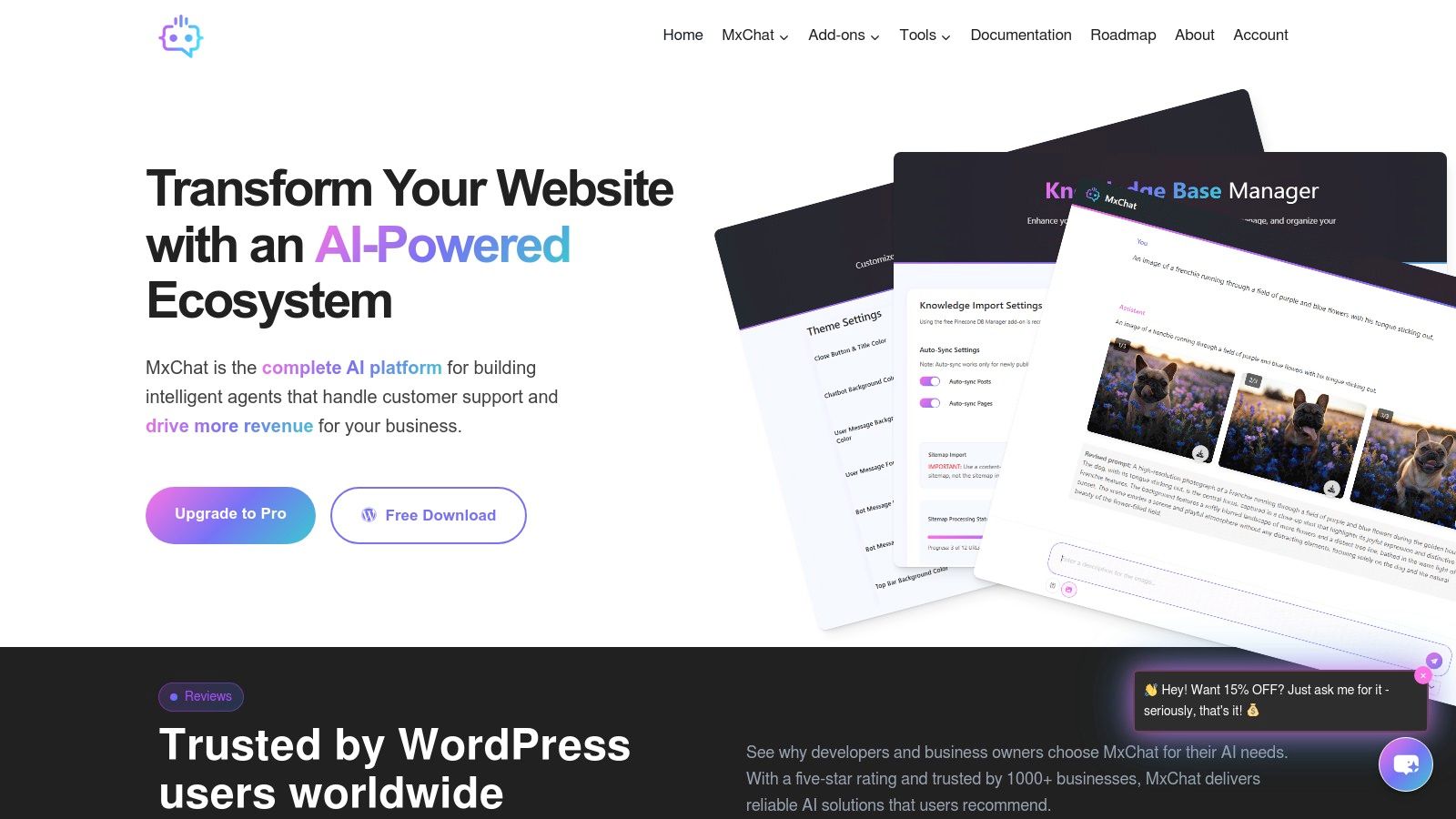
Unlike many SaaS platforms that lock you into a single AI model, MxChat offers multi-model access to leading providers like OpenAI, Anthropic, and Google. This flexibility ensures your chatbot's responses are not just accurate but also aligned with your desired brand personality, from professional to witty. The platform’s value proposition is significantly enhanced by its one-time lifetime license, making it a predictable and cost-effective solution for long-term growth.
Key Features & Use Cases
- WordPress-Native Integration: As a dedicated plugin, MxChat ensures seamless compatibility and performance within your existing WordPress or WooCommerce site.
- Revenue-Driving Tools: It directly impacts sales with WooCommerce integration, providing automated product recommendations, order status updates, and in-chat lead capture forms.
- Unlimited AI Agents: Deploy as many chatbots as needed, each with a unique knowledge base and personality, perfect for different site sections or customer segments.
- Multi-Model RAG: Leverages top AI models to provide contextually aware answers, reducing agent workload and improving customer satisfaction.
Pricing Structure
MxChat is offered with a lifetime pricing model, including all future updates and premium add-ons.
- Pro Plan: $69.97 (often discounted) for a single site license.
- Agency Plan: $174.97 (often discounted) for 5 site licenses.
- Agency+ Plan: $279.97 (often discounted) for 10 site licenses.
Pros & Cons
| Pros | Cons |
|---|---|
| Lifetime Pricing: A single payment provides a predictable, low-cost alternative to monthly SaaS fees. | Setup Effort Required: Achieving optimal performance requires initial tuning of the knowledge base and connecting your own AI model API keys. |
| Deep WordPress & WooCommerce Integration: Seamlessly embeds into your site for a cohesive user experience and powerful e-commerce functions. | Developing Features: Some advanced capabilities like real-time web search integration are still under development. |
| No-Code & Developer Friendly: Easy for beginners to set up, yet extensible with APIs and tools for advanced customization by developers. | |
| Flexible AI Model Choice: Not locked into one provider; you can choose the best model for your budget and performance needs. |
Best for: WordPress and WooCommerce site owners looking for a powerful, cost-effective, and highly customizable AI chatbot solution to automate support and drive conversions without recurring costs.
Learn more at MxChat.ai
2. Freshdesk (Freshworks)
Freshdesk has carved out a significant space as one of the best Zendesk alternatives, particularly for small to mid-market businesses prioritizing rapid deployment and affordability. It offers a comprehensive omnichannel help desk that unifies conversations from email, chat, social media, and phone into a single, intuitive ticketing system. This makes it an ideal choice for teams looking to centralize their customer interactions without a lengthy setup process.
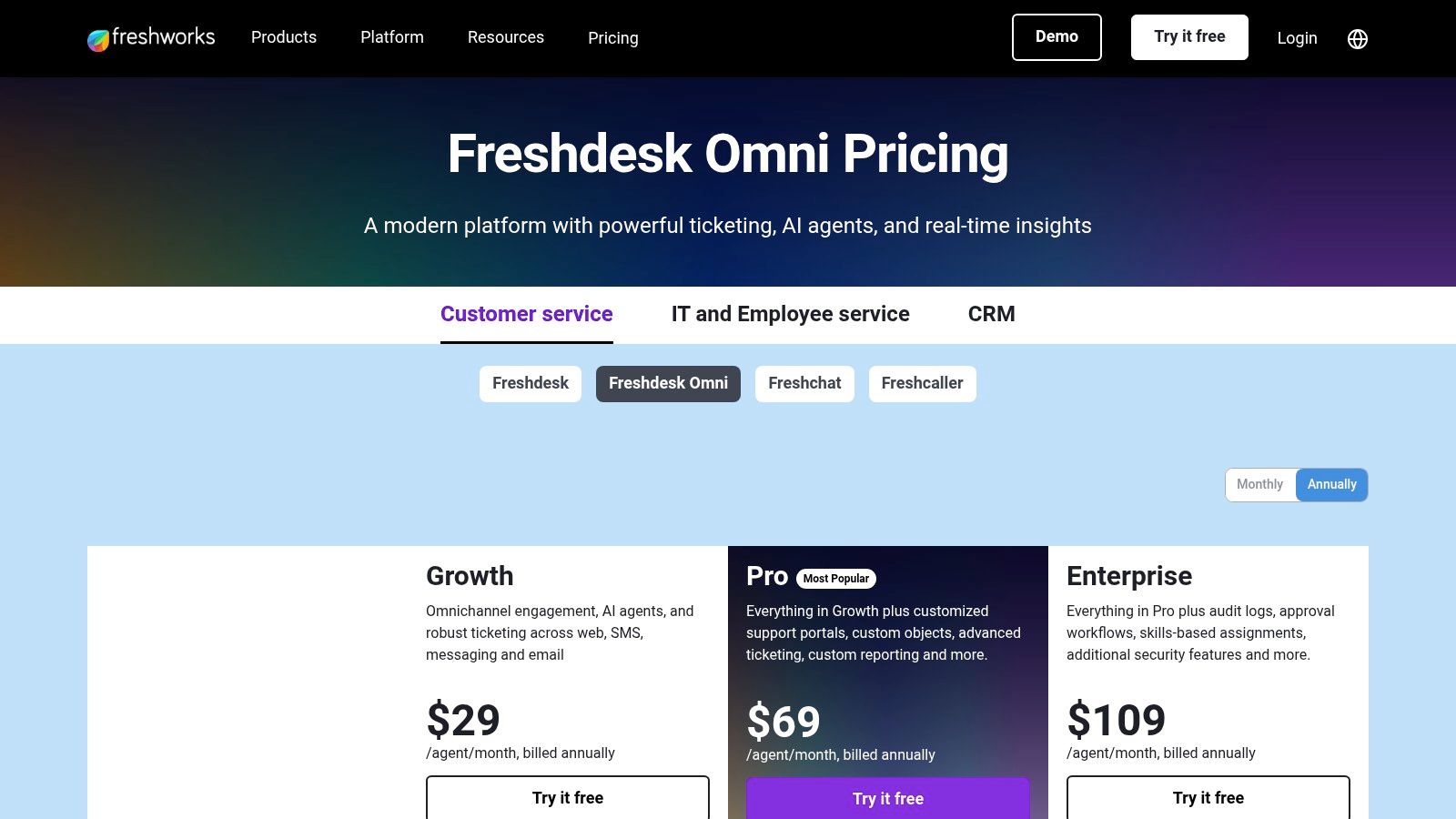
The platform stands out with its user-friendly interface and Freddy AI, which provides agent assistance and workflow automation. You can explore how Freshdesk's tools contribute to a more efficient support system and discover customer service automation strategies. When evaluating its potential, it’s also wise to consider its integration ecosystem. Understanding the various Freshworks data connector options can help you assess how it will fit into your existing tech stack.
Key Details & Features
- Best For: SMBs and mid-market companies needing a robust, easy-to-use omnichannel solution.
- Pricing: Offers a free plan for up to 10 agents. Paid plans start at $15 per agent/month (billed annually).
- Key Features: Omnichannel ticket management, Freddy AI agent assistance, self-service portals, and over 1,000 marketplace apps.
- Pros: Very competitive pricing, fast implementation, and a clear, scalable plan structure.
- Cons: Advanced reporting and routing are locked behind higher-tier plans, and the cost can increase with omnichannel and AI add-ons.
Website: https://www.freshworks.com/freshdesk/
3. Intercom
Intercom excels as one of the best Zendesk alternatives for businesses prioritizing proactive, conversational support within a single, powerful platform. It combines a next-generation help desk, live chat, and proactive engagement tools to create a seamless in-product experience. Its core strength lies in its AI-powered agent, Fin, which is designed to resolve customer queries instantly, and its robust outbound messaging features for onboarding and announcements.
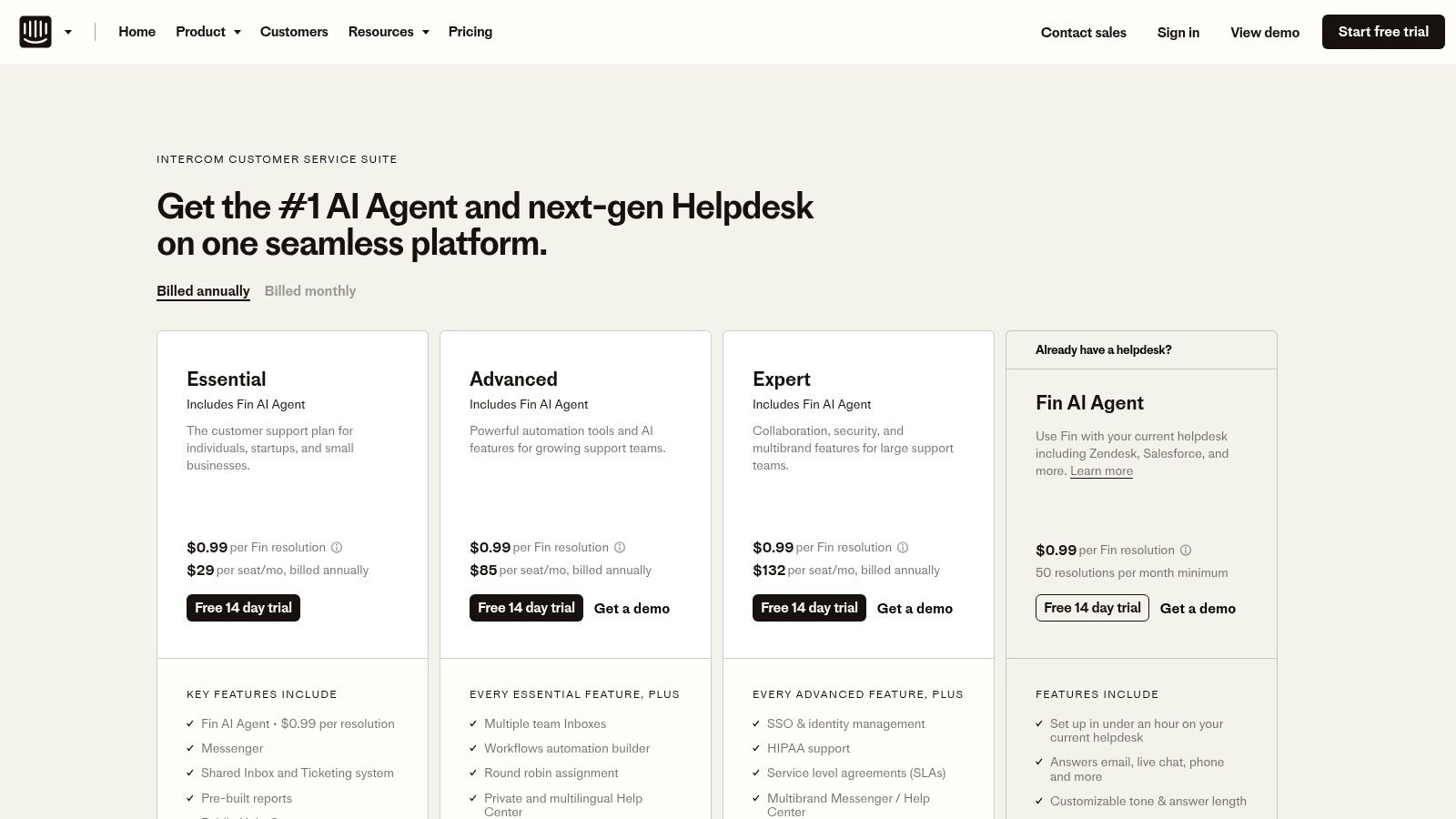
The platform is built around a unified inbox that brings together interactions from its messenger, email, and social channels. Its AI Copilot assists human agents, while Fin handles resolutions autonomously. This focus on AI automation makes it a leader in the conversational support space, and you can explore how it compares to other top-tier tools in this guide to the best chatbots for customer service. Intercom is ideal for teams aiming to provide support, engage users, and convert leads from one central hub.
Key Details & Features
- Best For: SaaS companies and online businesses focused on conversational marketing and proactive in-app support.
- Pricing: Custom pricing based on seats and usage. Starter plan from $74/month. Fin AI is priced per resolution.
- Key Features: Fin AI Agent, AI Copilot for agents, unified omnichannel inbox, proactive product tours and posts, and multilingual help centers.
- Pros: Best-in-class in-app messaging UX, powerful AI automation across channels, and flexible cost estimation tools.
- Cons: Costs can scale quickly with more seats, AI resolutions, and outbound features. Some key outbound tools are add-ons.
Website: https://www.intercom.com/pricing
4. Help Scout
Help Scout positions itself as a top Zendesk alternative for customer-centric teams that prioritize a clean, human-touch experience over complex enterprise features. It excels with its shared inbox, which functions much like a standard email client but is supercharged with collaboration and automation tools. This design choice makes it incredibly intuitive for new agents, significantly reducing training time and allowing teams to focus on conversation quality rather than navigating a complicated platform.
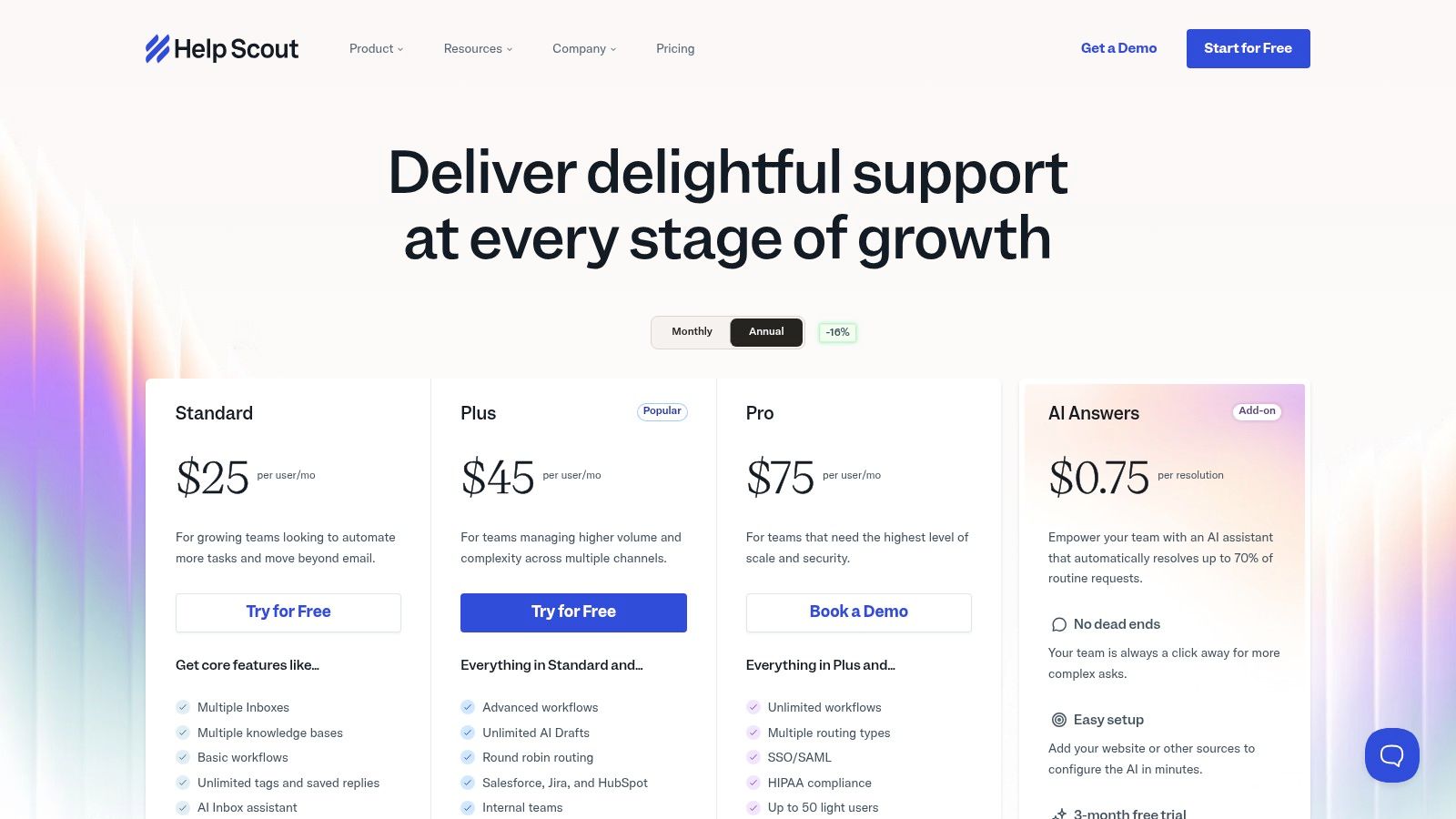
The platform is built around shared inboxes, a self-service knowledge base called Docs, and live chat, creating a focused yet powerful support stack. Its strength lies in simplicity and ease of use, making it ideal for startups and SMBs that want to provide exceptional email support without the overhead of a more heavyweight system. Light automation through "Workflows" helps manage routine tasks, while integrations with tools like Salesforce and Jira ensure it can connect to your core business software.
Key Details & Features
- Best For: Startups and SMBs looking for an intuitive, email-first help desk with a fast learning curve.
- Pricing: Plans start at $20 per user/month (billed annually). A free plan is available for very small teams.
- Key Features: Shared inboxes, Docs knowledge base, workflow automation, saved replies, and optional AI Answers.
- Pros: Very fast learning curve, a clean UX that feels like email, and transparent pricing.
- Cons: Fewer deep customizations than larger platforms, with some security features locked behind upper-tier plans.
Website: https://www.helpscout.com/pricing/
5. Zoho Desk
Zoho Desk solidifies its position as one of the best Zendesk alternatives for businesses deeply integrated into the Zoho ecosystem. It offers a powerful, context-aware help desk that shines when paired with Zoho CRM, providing support agents with a complete view of customer interactions across sales, marketing, and support. This tight integration allows for a more personalized and efficient service experience, making it an excellent choice for teams aiming to break down internal data silos.
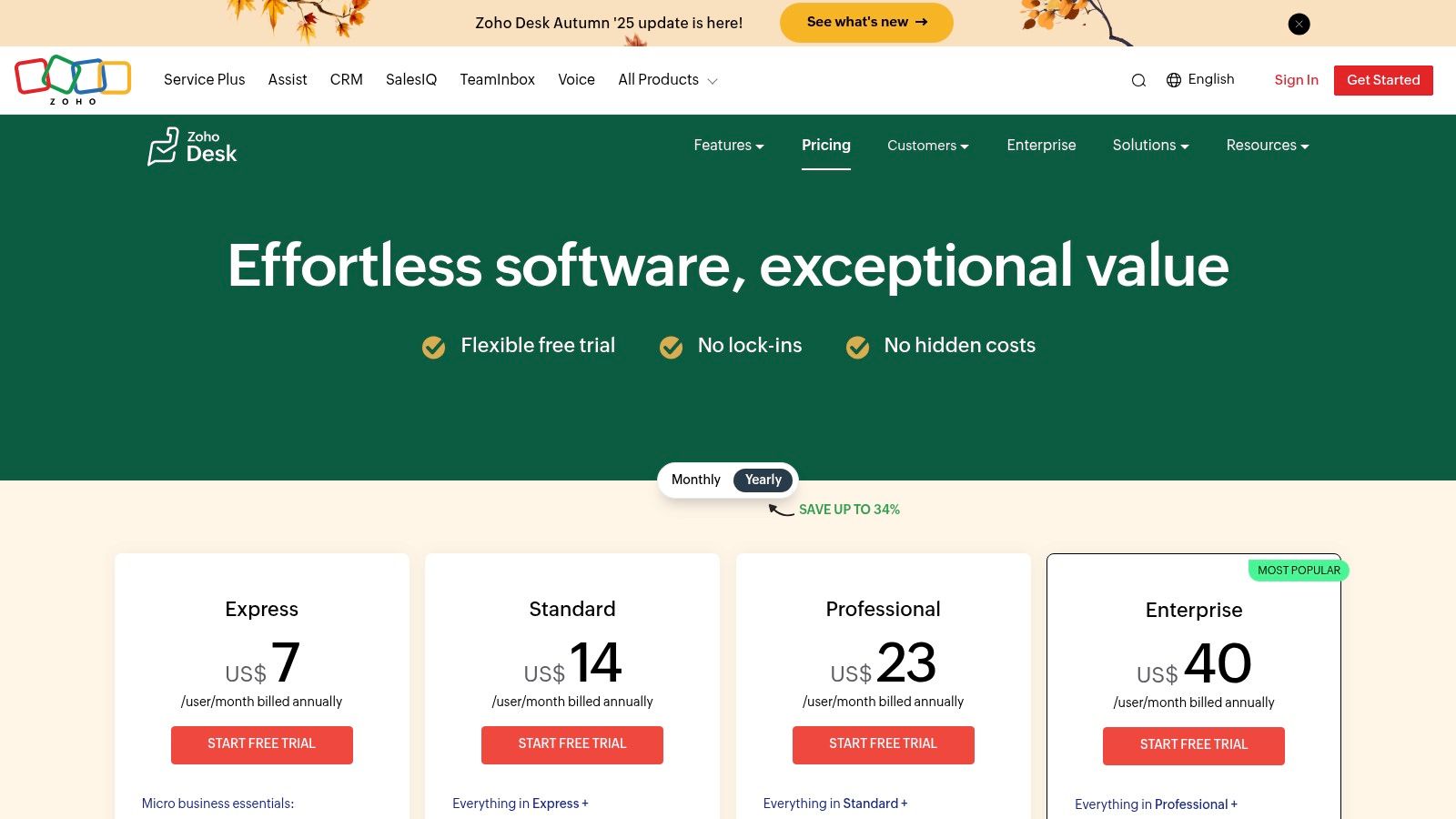
The platform is known for its incredible value, packing advanced features like its AI assistant, Zia, workflow automation, and extensive analytics into highly affordable plans. Zoho Desk enables teams to manage conversations from email, social media, and chat while building a multilingual self-service portal. Its process automation tools, called Blueprints, guide agents through complex support workflows, ensuring consistency and adherence to SLAs, which is a major advantage for scaling teams.
Key Details & Features
- Best For: Companies already using Zoho CRM or other Zoho apps seeking a feature-rich, cost-effective solution.
- Pricing: Offers a free plan for up to 3 agents. Paid plans start at $7 per agent/month (billed annually).
- Key Features: Omnichannel support, advanced workflow automation (Blueprints), Zia AI assistance, a multilingual knowledge base, and deep integration with the Zoho suite.
- Pros: Among the most affordable options for its feature set, seamless integration with Zoho CRM, and a generous free plan.
- Cons: The UI can feel complex and may require a significant time investment for initial configuration, with some advanced features gated to higher tiers.
Website: https://www.zoho.com/desk/pricing.html
6. HubSpot Service Hub
HubSpot Service Hub positions itself as one of the best Zendesk alternatives for businesses already invested in or planning to use the HubSpot ecosystem. Its greatest strength is its native integration with the HubSpot CRM, providing a unified view of the customer journey across marketing, sales, and service. This allows support teams to have complete context for every interaction, from initial lead capture to post-sale support, all within a single platform.
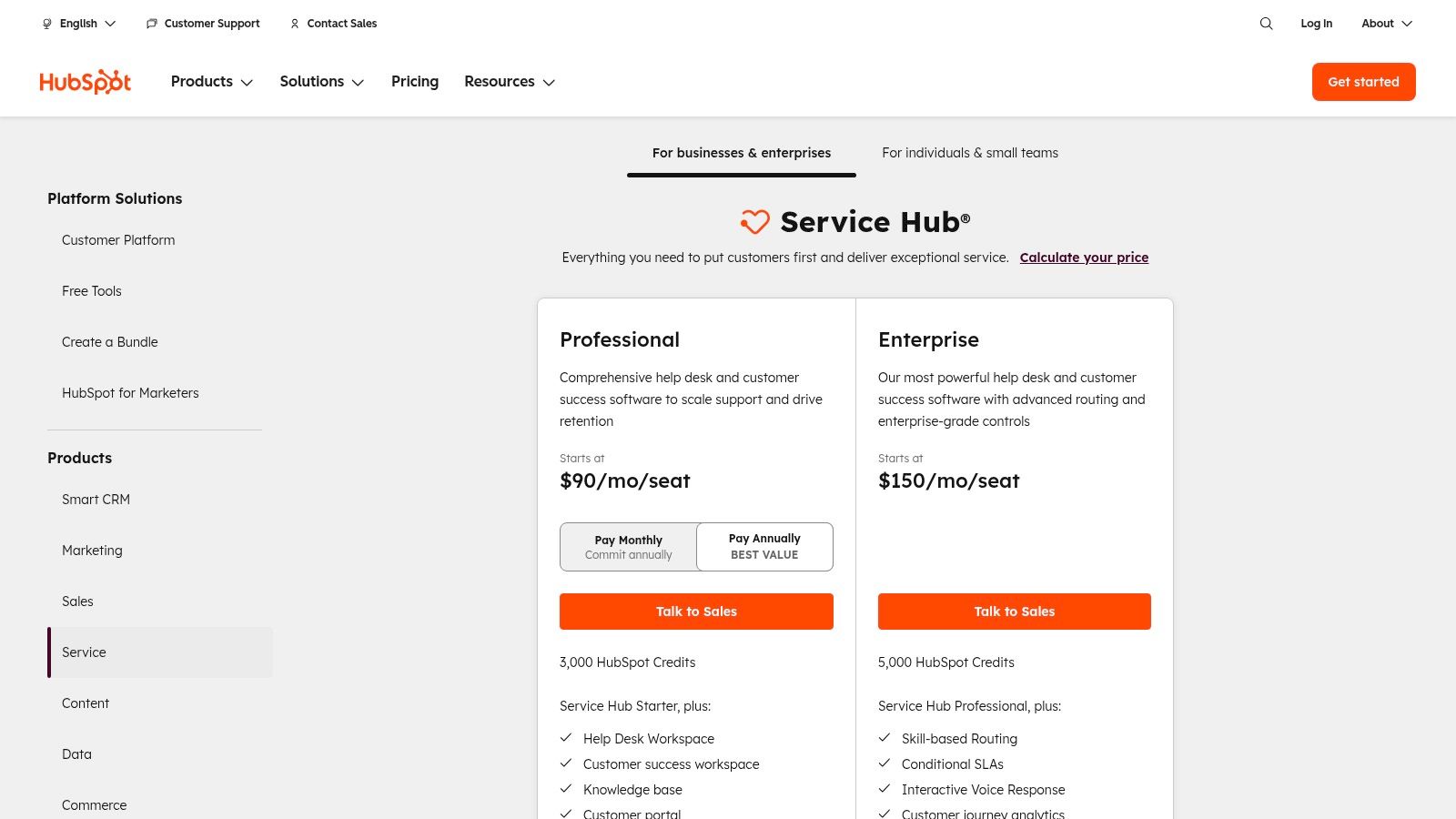
The platform offers a robust set of tools, including ticketing, a shared inbox, and a knowledge base, that scale from free plans to enterprise-level solutions. For those looking to leverage automation, HubSpot’s workflow capabilities are powerful, and you can explore strategies for HubSpot chatbots to enhance customer engagement. The inclusion of HubSpot Academy also provides exceptional onboarding and educational resources, making it easier for teams to adopt and master the software.
Key Details & Features
- Best For: Companies using HubSpot CRM that want a fully integrated customer service solution.
- Pricing: Free tools are available. Paid plans start at $45/month (for two users, billed annually).
- Key Features: Ticketing and shared inbox tied to CRM data, knowledge base, SLAs, automation workflows, and access to a massive integration marketplace.
- Pros: Seamless alignment between service, sales, and marketing; scales from free to enterprise; excellent onboarding and educational resources.
- Cons: Higher-tier plans require annual billing and may have mandatory onboarding fees; costs can escalate quickly with additional users and add-ons.
Website: https://www.hubspot.com/pricing/service
7. Jira Service Management (Atlassian)
For organizations already embedded in the Atlassian ecosystem, Jira Service Management stands out as one of the best Zendesk alternatives, especially for IT and development-centric teams. It transforms Jira from a pure development tool into a comprehensive IT Service Management (ITSM) platform, unifying development and operations workflows seamlessly. This deep integration allows support tickets to be directly linked to development backlogs, streamlining bug reporting, incident management, and change requests.
The platform excels at managing complex internal processes with robust tools for service level agreements (SLAs), asset management, and change approvals. Its power lies in configurable workflows that can be tailored to very specific operational needs. While it serves external customers, its primary strength is as an internal-facing service desk. You can dive deeper into how platforms like this can streamline your operations and learn more about help desk automation. This approach ensures technical support and development are perfectly aligned, reducing resolution times for technical issues.
Key Details & Features
- Best For: Companies heavily using Jira and Confluence for IT, DevOps, and engineering support.
- Pricing: Offers a free plan for up to 3 agents. Paid plans start at $22.05 per agent/month (billed annually).
- Key Features: Customizable request portals, SLA management, incident and change management modules, powerful workflow automation, and deep integration with the Atlassian suite.
- Pros: Unmatched integration for teams already on Jira, advanced ITSM capabilities, and enterprise-grade reliability and security controls.
- Cons: Can be complex to configure and administer compared to simpler tools, and its pricing model can become expensive as you add agents or advanced features.
Website: https://www.atlassian.com/software/jira/service-management
8. Salesforce Service Cloud
Salesforce Service Cloud is an enterprise-grade customer service platform deeply integrated into the wider Salesforce ecosystem. As one of the best Zendesk alternatives for large organizations, it goes beyond simple ticketing to offer a comprehensive CRM-powered solution. It excels at providing a 360-degree view of the customer, combining sales, marketing, and service data into a unified agent workspace for highly contextualized support.
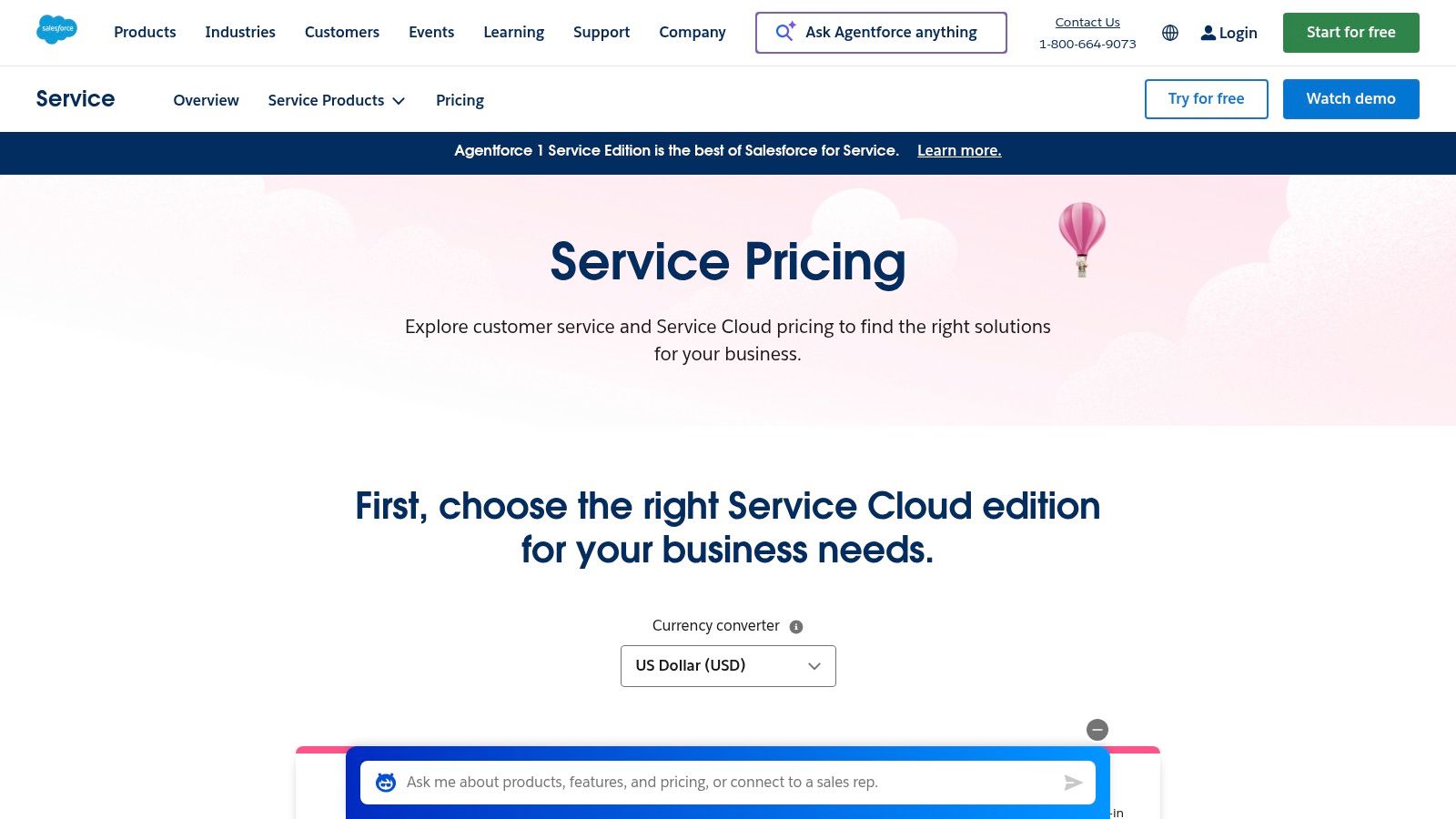
The platform is built for scalability and customization, leveraging the vast AppExchange marketplace to extend its functionality. With powerful tools like Agentforce AI, omnichannel routing, and robust analytics powered by Data Cloud options, it is designed for businesses that require extensive control, deep integration with their CRM, and enterprise-level security and governance. This makes it a top choice for companies already standardized on the Salesforce platform.
Key Details & Features
- Best For: Organizations standardizing on Salesforce and needing extensive enterprise capabilities and ecosystem support.
- Pricing: Plans start at $25 per user/month (billed annually).
- Key Features: Omnichannel case management, Agentforce AI features, extensive knowledge base tools, and access to the vast AppExchange marketplace.
- Pros: Deep enterprise capabilities and integrations, strong analytics and extensibility, and a large global ecosystem of partners.
- Cons: Annual contracts and a higher total cost of ownership at scale; add-ons and credits can complicate pricing.
Website: https://www.salesforce.com/service/pricing/
9. Front
Front reimagines the help desk by creating a customer operations platform built around a shared inbox, making it one of the most collaborative Zendesk alternatives. It excels at unifying communication channels like email, chat, SMS, and social media into a single, familiar interface that feels more like a modern email client than a traditional ticketing system. This approach is ideal for teams that require deep internal collaboration to resolve customer issues effectively.
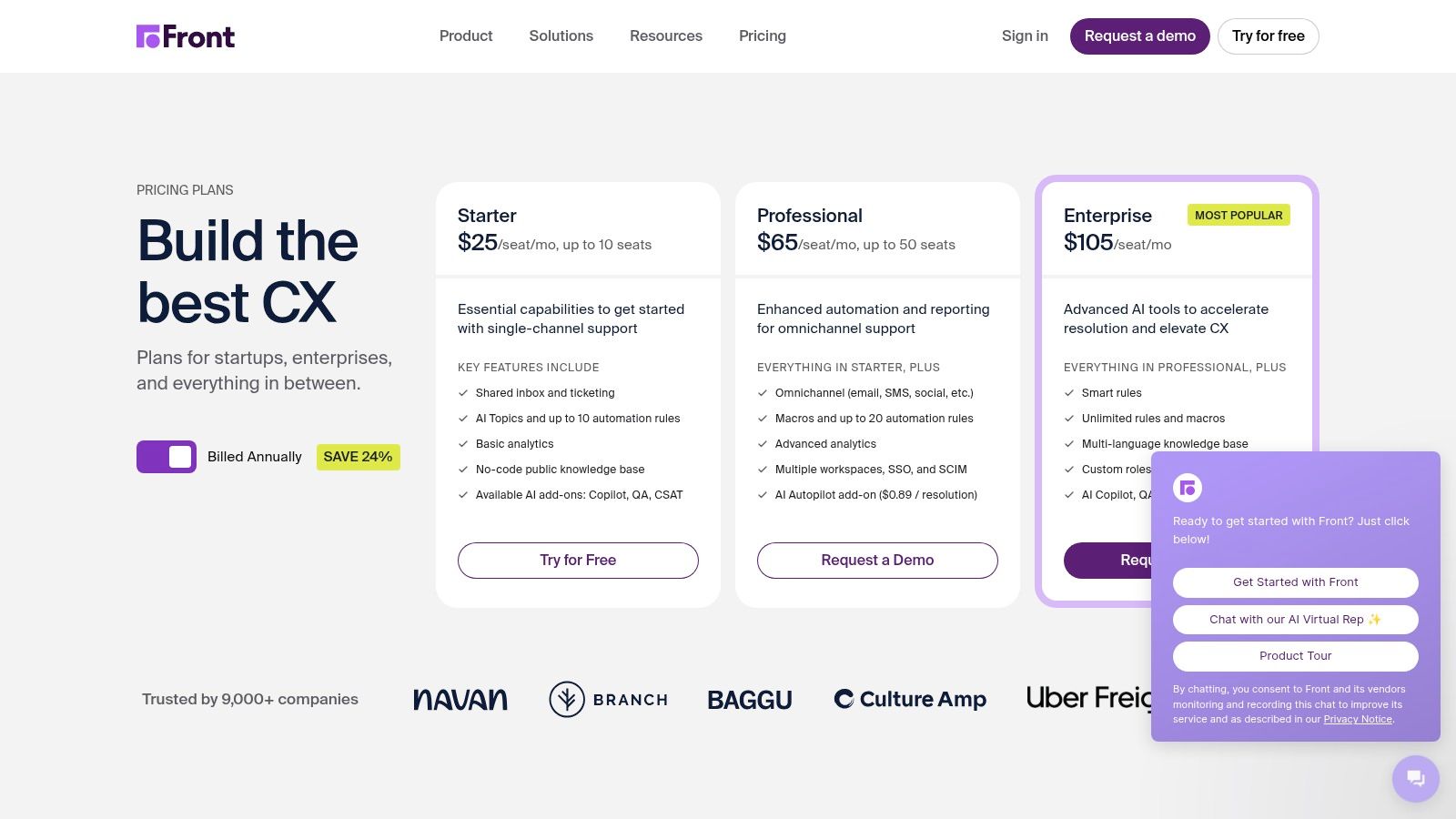
The platform is distinguished by its clean UI and powerful, user-friendly automation capabilities. Teams can create unlimited rules on higher-tier plans to route and triage conversations without complex coding. Front also offers a suite of AI add-ons, including an autopilot for resolutions and a copilot for agent assistance, allowing businesses to scale support while maintaining a high-touch, personal feel with customers.
Key Details & Features
- Best For: Teams that heavily rely on email and require strong internal collaboration features to manage customer conversations.
- Pricing: Starts at $59 per seat/month (billed annually) for a minimum of two seats. Omnichannel plans start at a higher tier.
- Key Features: Omnichannel shared inbox, robust automation rules, knowledge base, detailed analytics, and optional AI productivity tools.
- Pros: Excellent email-like user experience, flexible and powerful automation, and a clear menu of add-on features.
- Cons: The starter plan is limited to a single channel, and the overall cost can increase significantly with AI add-ons.
Website: https://front.com/pricing
10. LiveAgent
LiveAgent positions itself as a strong Zendesk alternative for cost-conscious teams that refuse to compromise on channel coverage. It is an all-in-one help desk combining ticketing, live chat, a call center, and social media management into a single, affordable platform. This makes it an excellent choice for businesses needing broad functionality without the enterprise-level price tag.
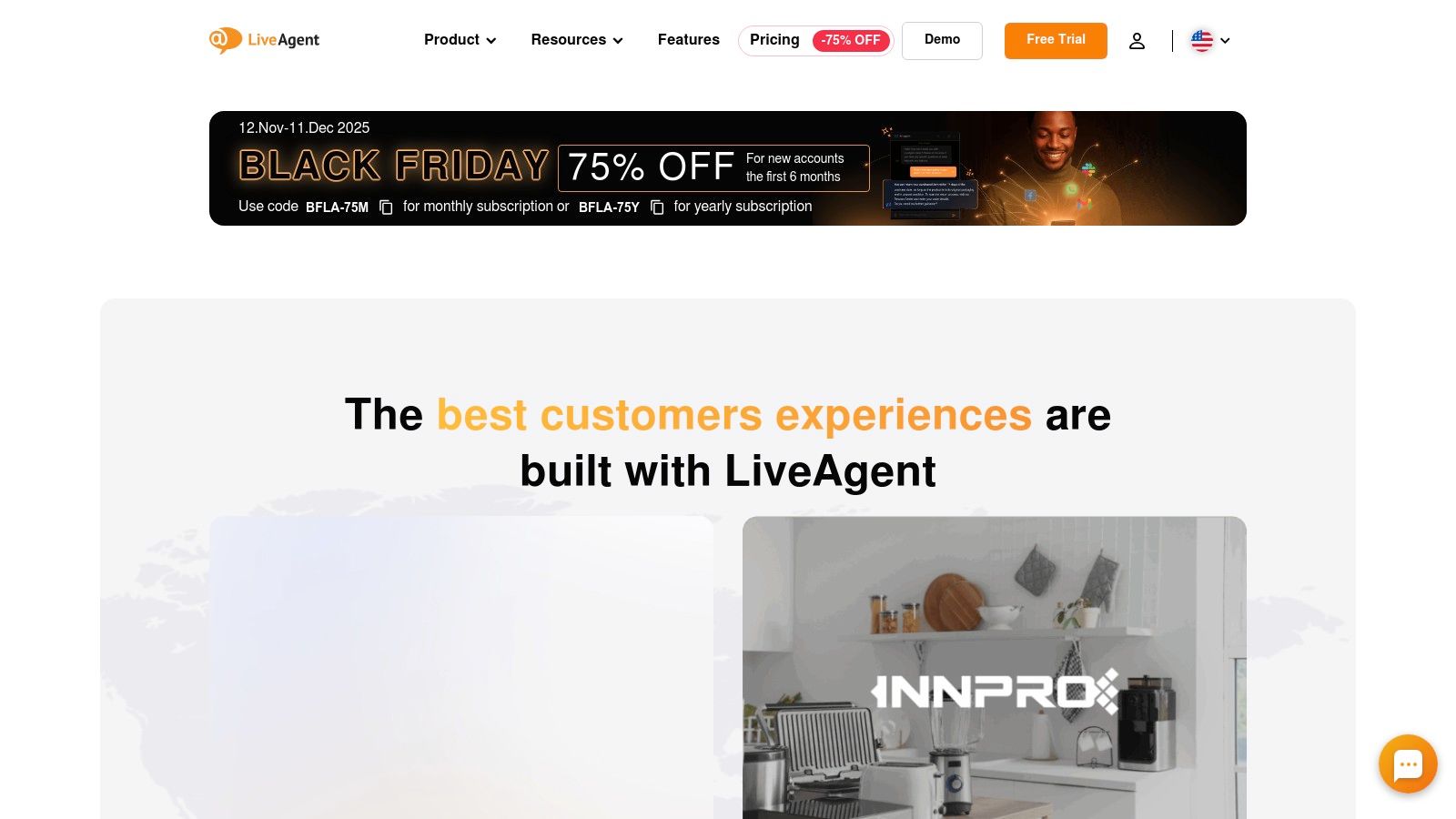
The platform’s strength lies in its transparent and feature-packed pricing tiers, which provide a clear path for scaling. Teams can start with fundamental ticketing and chat and later add advanced call center features or social integrations as needed. While its interface is more utilitarian than premium competitors, its focus on core functionality and affordability provides significant value for support teams looking to maximize their budget.
Key Details & Features
- Best For: SMBs and startups needing a budget-friendly, all-in-one help desk with extensive channel support.
- Pricing: Offers a limited free plan. Paid plans start at $9 per agent/month (billed annually).
- Key Features: Omnichannel ticketing, built-in call center with IVR, proactive live chat, knowledge base, and over 200 integrations.
- Pros: Very low entry price per agent, broad channel coverage in mid-tier plans, and transparent pricing grids.
- Cons: The user interface feels functional but less modern than premium tools, and some features like branding removal are sold as add-ons.
Website: https://www.liveagent.com/pricing
11. Gorgias
Gorgias is a purpose-built help desk for direct-to-consumer (DTC) ecommerce brands. As one of the best Zendesk alternatives in the ecommerce space, it offers deep integrations with Shopify, BigCommerce, and WooCommerce. This allows support agents to manage pre- and post-purchase inquiries with unprecedented context, pulling customer order history, shipping details, and loyalty status directly into the ticket view. This focus on commerce makes it a powerhouse for brands aiming to turn their support center into a revenue generator.
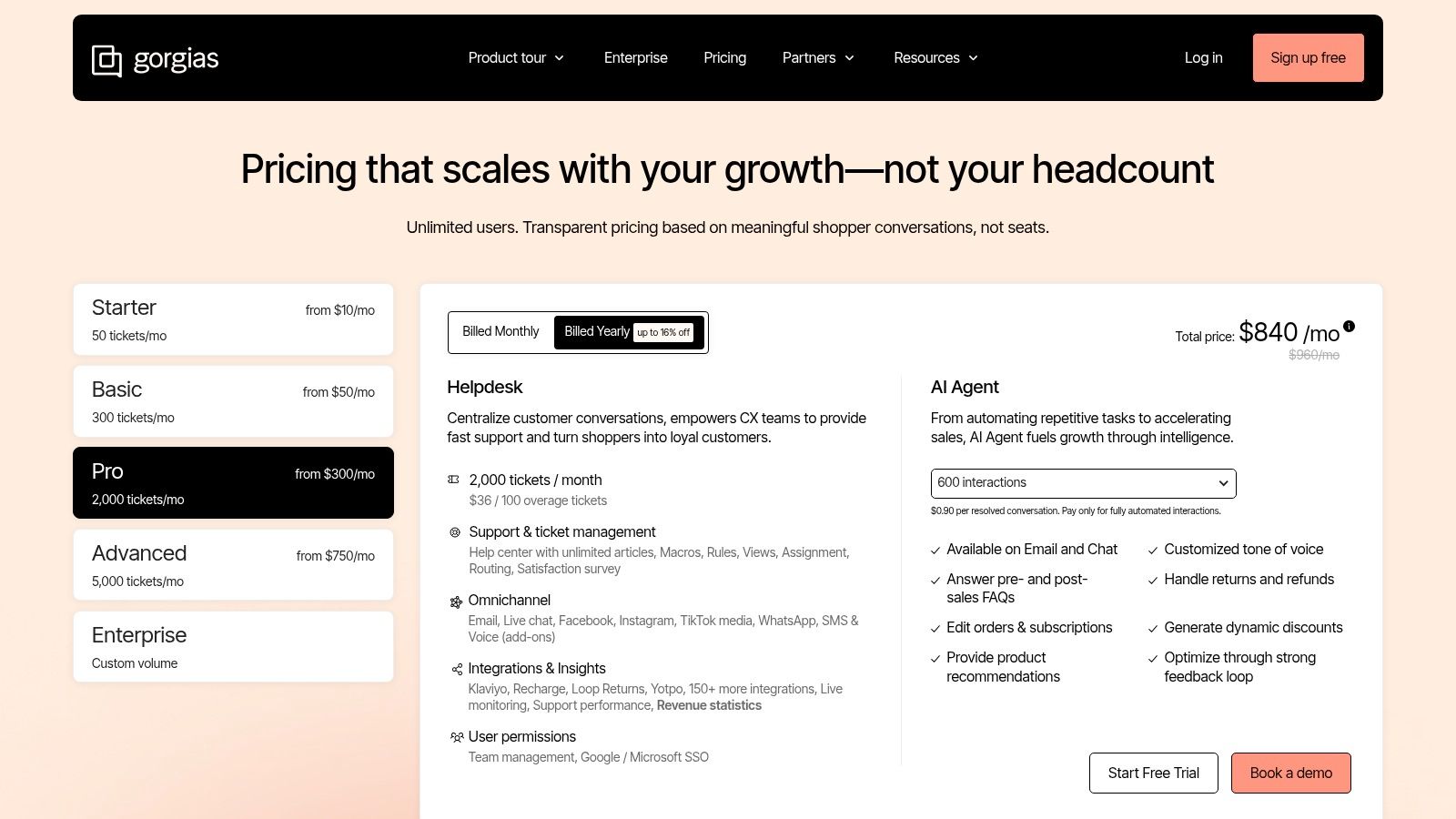
The platform's standout feature is the ability for agents to perform powerful actions like editing orders or issuing refunds directly from the help desk, which significantly reduces response times. Gorgias also provides unique revenue attribution, allowing teams to track sales generated from support interactions. This transforms customer service from a cost center into a measurable profit driver, a key differentiator from more generalized help desks.
Key Details & Features
- Best For: Ecommerce brands on Shopify, BigCommerce, or WooCommerce that need deep platform integration and revenue-focused support tools.
- Pricing: Plans are ticket-based, starting at $10/month for a "Starter" plan with up to 20 tickets. The "Basic" plan is $50/month for 300 tickets.
- Key Features: Deep ecommerce integrations, direct in-app actions (refunds, order edits), revenue attribution for support, and omnichannel management including social media and SMS.
- Pros: Unmatched Shopify integration and data visibility, clear analytics for ecommerce CX, and plans tied directly to ticket volume.
- Cons: Not a good fit for non-ecommerce businesses, and overage charges apply for exceeding monthly ticket limits.
Website: https://www.gorgias.com/pricing
12. Hiver
Hiver positions itself as a unique Zendesk alternative by transforming Gmail into a powerful, collaborative help desk. It is purpose-built for teams that live inside Google Workspace and want to manage shared inboxes like support@ or sales@ without leaving their familiar email interface. This approach eliminates the need for complex software and significantly reduces agent training time, making it ideal for businesses seeking efficiency and simplicity.
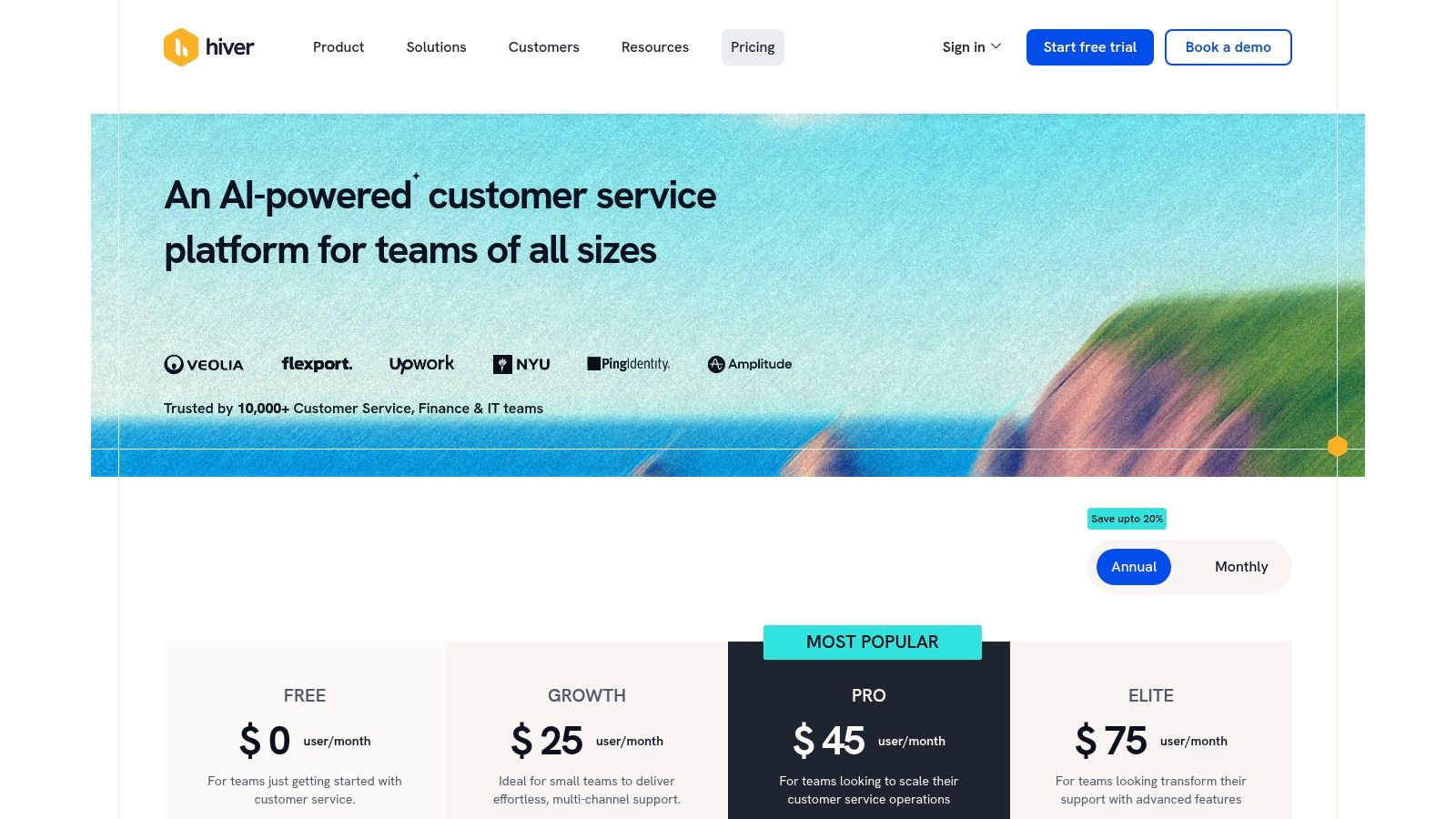
The platform enhances Gmail with crucial support features like ticket assignment, collision alerts, internal notes, and automation rules. By embedding these tools directly into the inbox, teams can collaborate on customer inquiries seamlessly. Hiver also provides robust analytics, SLA management, and CSAT surveys, giving managers the visibility they need to track performance and improve customer satisfaction without migrating to an entirely new system.
Key Details & Features
- Best For: Teams heavily invested in Google Workspace that need help desk functionality without leaving Gmail.
- Pricing: Offers a free plan for basic triage. Paid plans start at $15 per user/month (billed annually).
- Key Features: Shared inbox management within Gmail, ticket automations, SLA tracking, collision alerts, analytics, and CSAT surveys.
- Pros: Near-zero learning curve for Gmail users, quick onboarding, and strong value on Pro/Elite plans.
- Cons: Primarily beneficial for companies centered around the Google ecosystem; lacks the deep custom objects of enterprise suites.
Website: https://hiverhq.com/pricing
Top 12 Zendesk Alternatives — Quick Comparison
| Product | Core features (✨) | UX / Quality (★) | Value / Pricing (💰) | Target (👥) |
|---|---|---|---|---|
| MxChat 🏆 | ✨ RAG + multi-model, unlimited bots, KBs, WooCommerce, PDF/image analysis, similarity tester | ★★★★★ — WordPress-native, no-code & dev-friendly | 💰 Lifetime license — Pro $69.97 (promo |
👥 WordPress sites, e‑commerce, agencies, devs & non-technical users |
| Freshdesk (Freshworks) | ✨ Omnichannel Omni, Freddy AI, KB, automations, 1,000+ apps | ★★★★ — Fast to deploy, straightforward admin | 💰 Subscription; SMB-friendly pricing, AI/omni add-ons may cost extra | 👥 SMBs & mid-market support teams |
| Intercom | ✨ In-app messenger, Fin AI (per resolution), proactive engagement | ★★★★★ — Best-in-class in-app conversational UX | 💰 Usage & seat-based; AI resolutions can drive up cost | 👥 Product-led & SaaS teams focused on in‑app CX |
| Help Scout | ✨ Email-first shared inbox, Docs KB, workflows & saved replies | ★★★★ — Clean, email-like UX; fast learning curve | 💰 Subscription with free/basic tier; transparent plans | 👥 Startups, SMBs and email‑centric support teams |
| Zoho Desk | ✨ Omnichannel, automation/blueprints, Zia AI, analytics | ★★★★ — Feature-rich, affordable | 💰 Low-cost tiers; free plan up to 3 users | 👥 Budget-conscious teams and Zoho ecosystem users |
| HubSpot Service Hub | ✨ CRM-native tickets, KB, automation, reporting tied to CRM | ★★★★ — Scales with HubSpot CRM benefits | 💰 Free→Enterprise; costs grow with seats, add-ons & annual billing | 👥 Teams needing tight sales + service alignment |
| Jira Service Management (Atlassian) | ✨ ITSM: request portals, SLAs, CMDB, automations & virtual agent | ★★★★ — Powerful ITSM, steeper admin overhead | 💰 Per-agent tiers; advanced features on higher plans | 👥 IT/DevOps teams and Atlassian-centric organizations |
| Salesforce Service Cloud | ✨ Cases, omnichannel routing, Data Cloud, native AI & AppExchange | ★★★★★ — Enterprise-grade, highly extensible | 💰 High TCO; annual contracts, add-ons & credits | 👥 Large enterprises standardizing on Salesforce |
| Front | ✨ Shared inbox + omnichannel, collaboration, AI add-ons | ★★★★ — Polished UI, collaboration-first | 💰 Subscription; clear tiering, AI add-ons increase cost | 👥 Teams wanting collaborative, email-like support |
| LiveAgent | ✨ Ticketing, live chat, call center/IVR, social channels | ★★★ — Broad channels but utilitarian UI | 💰 Very low entry price per agent; frequent promos | 👥 Cost-conscious teams needing wide channel coverage |
| Gorgias | ✨ Deep ecommerce integrations, macros, revenue attribution | ★★★★ — Optimized for ecommerce workflows | 💰 Ticket-based pricing; overage charges possible | 👥 DTC ecommerce brands (Shopify/BigCommerce/WooCommerce) |
| Hiver | ✨ Gmail-native shared inbox, notes, collision alerts, automations | ★★★★ — Near-zero learning curve for Gmail users | 💰 Per-user subscription; good value on Pro/Elite plans | 👥 Google Workspace teams wanting minimal change management |
Making the Right Choice for Your Team
Navigating the landscape of customer support platforms can feel overwhelming, but finding the right tool is a strategic investment in your customer relationships and operational efficiency. As we've explored, the market is rich with powerful and diverse best zendesk alternatives, each catering to specific business needs, team sizes, and budgets. Your final decision shouldn't be about finding a one-to-one replacement for Zendesk, but rather identifying a solution that aligns perfectly with your unique support philosophy and growth trajectory.
Key Takeaways from Our Review
The options range from comprehensive, all-in-one platforms to highly specialized tools. Enterprise-grade solutions like Salesforce Service Cloud and HubSpot Service Hub offer immense power and deep CRM integration, but their complexity and cost may be prohibitive for smaller teams. On the other hand, platforms like Help Scout and Front excel at providing a human-centric, email-first support experience that feels personal and intuitive.
For teams managing high-volume, multi-channel support, Freshdesk and LiveAgent present robust, feature-rich environments. Meanwhile, eCommerce businesses, especially those on Shopify, will find Gorgias’s deep integration with their ecosystem invaluable for streamlining support and sales. The key is to look past feature lists and focus on how a platform will fit into your team's daily workflow.
How to Choose Your Ideal Zendesk Alternative
Making a confident choice requires a clear understanding of your priorities. Before you commit, work through these critical evaluation steps with your team:
- Define Your Core Channels: Are you primarily an email-based team? Or is live chat, social media, or phone support a critical part of your strategy? Prioritize platforms that excel in your most important channels.
- Assess Your Technical Stack: List your essential tools, such as your CRM, eCommerce platform (like WooCommerce), and internal communication software. Check for native integrations to ensure a seamless flow of data and avoid creating information silos.
- Evaluate Your Team's Size and Workflow: A small, collaborative team might thrive with a shared inbox tool like Hiver, while a larger, structured team may require the advanced ticketing, routing, and reporting found in Zoho Desk or Jira Service Management.
- Forecast Your Future Needs: Consider your growth plans for the next one to two years. Will you need more advanced automation, AI capabilities, or multi-brand support? Choose a platform that can scale with you, not one you'll outgrow quickly.
The most crucial step is to leverage free trials. Get your agents to actively use the platform to handle real customer inquiries. This hands-on experience is the only way to truly assess the user interface, test key workflows, and confirm that a tool doesn’t just look good on paper but actually empowers your team to deliver exceptional service.
Choosing the right Zendesk alternative is more than a software decision; it's a commitment to a better way of supporting your customers. By carefully evaluating your needs against the unique strengths of these platforms, you can find a solution that not only resolves today’s challenges but also becomes a cornerstone of your long-term success.
Ready to embrace an AI-native approach built specifically for WordPress and WooCommerce? MxChat offers a powerful, cost-effective alternative with its one-time payment model, eliminating recurring subscription fees. Transform your customer support with intelligent automation and deep CMS integration by exploring MxChat today.