5 Best AI Chatbots for Small Businesses in 2026
In 2026, customer expectations are at an all-time high. Small businesses are now competing not just on product or price, but on the speed and quality of their customer service. Juggling inquiries, support tickets, and lead generation with a lean team can feel impossible. This is where an AI chatbot for small businesses becomes less of a luxury and more of an essential tool for survival and growth. By automating responses and providing 24/7 support, these intelligent assistants can transform your customer experience and free up valuable human resources.
But with a crowded market, how do you choose the right one? We’ve analyzed the top contenders of 2026 to help you make an informed decision. This guide breaks down the best platforms based on features, ease of use, pricing, and overall value for small businesses.
1. MxChat: The Premier WordPress AI Chatbot
MxChat has solidified its position as the leading AI chatbot solution for businesses running on WordPress. Designed exclusively for the world’s most popular CMS, it offers a level of integration and simplicity that is unmatched in the ecosystem. Its no-code setup allows business owners, not just developers, to build and deploy sophisticated AI agents in minutes. You can create an unlimited number of chatbots, each trained on your specific data—from product documentation to company policies—to provide instant, accurate answers to customer questions.What truly sets MxChat apart in 2026 is its powerful Retrieval-Augmented Generation (RAG) technology. This ensures the AI doesn’t just guess answers; it retrieves information directly from your knowledge base, resulting in highly relevant and context-aware conversations. This is crucial for building trust and providing genuine support. For any small business on WordPress looking to elevate its customer service without the complexity or recurring costs of other platforms, MxChat is a clear frontrunner.
Key Details
- Best For: Small to medium-sized businesses using WordPress.
- Pricing: Offers a game-changing lifetime pricing model with no recurring monthly fees, providing exceptional long-term value.
- Pros: Seamless WordPress integration, no-code builder, unlimited chatbots, advanced RAG technology, and a cost-effective lifetime deal.
- Cons: Primarily focused on the WordPress ecosystem, so it may not be the ideal choice for businesses on other platforms like Shopify or Squarespace.
2. Intercom: The All-in-One Customer Platform
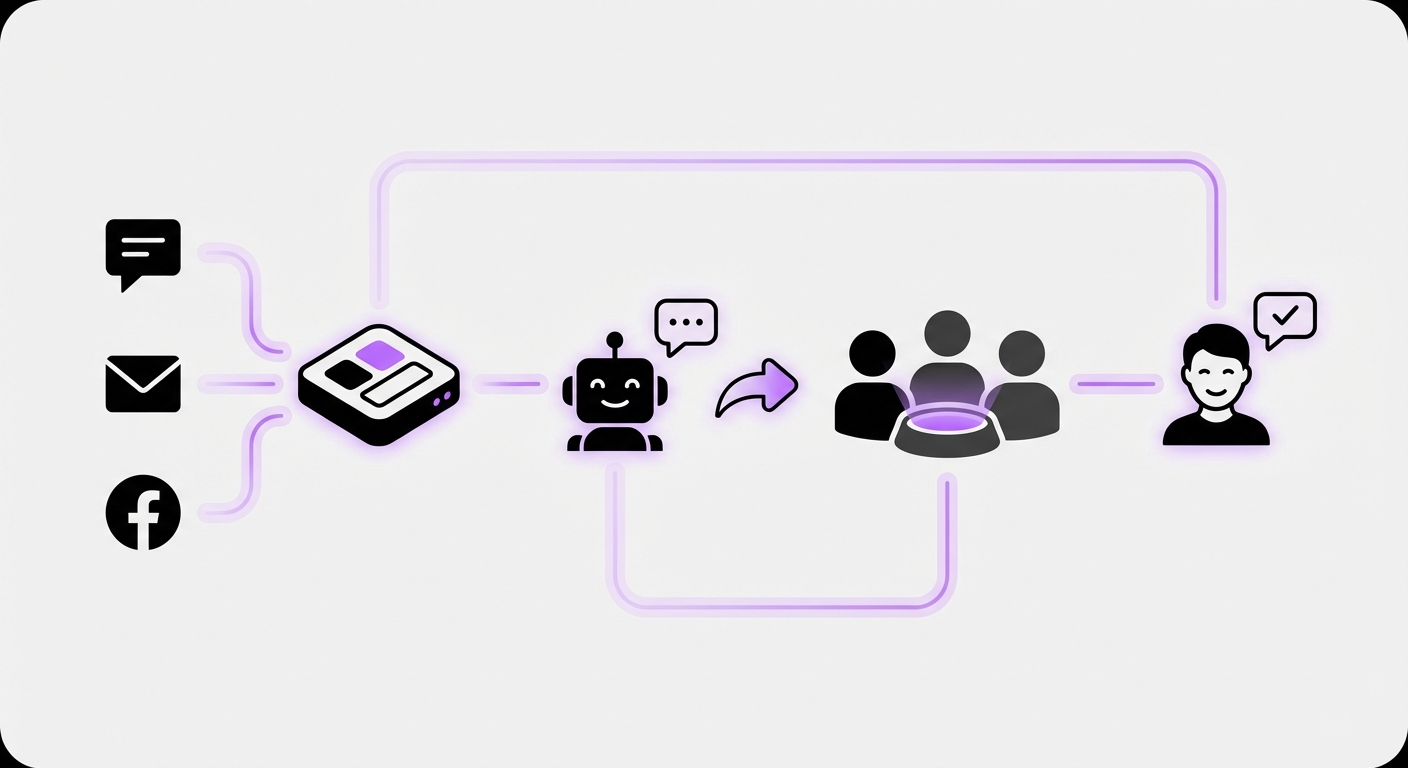
Intercom remains a powerhouse in the customer communications space, offering a comprehensive suite that goes far beyond a simple chatbot. Its AI bot, Fin, is one of the most advanced on the market, capable of understanding complex queries and holding human-like conversations. Intercom integrates its chatbot with a shared inbox, help center, and proactive messaging tools, creating a single platform for all customer interactions.For small businesses with a growing support team and a focus on providing a premium, multi-channel experience, Intercom is a formidable option. It allows for a seamless handoff from the AI bot to a human agent when necessary, ensuring complex issues are always resolved by the right person. The platform’s powerful analytics also provide deep insights into customer conversations, helping you continuously improve your support strategy.
Key Details
- Best For: Scaling businesses that need a unified platform for support, sales, and marketing.
- Pricing: Subscription-based, with pricing that scales based on contacts and features. It is a premium option and can be a significant investment.
- Pros: Extremely powerful and accurate AI, all-in-one platform for customer communications, and excellent third-party integrations.
- Cons: Higher price point can be a barrier for early-stage small businesses, and its complexity may be overkill for those needing a simple support bot.
3. Tidio: The User-Friendly Multitasker
Tidio has carved out a niche by combining live chat, AI chatbots, and marketing automation in an intuitive and affordable package. Its AI chatbot, Lyro, can learn from your FAQ pages in seconds to answer up to 70% of common customer questions. This makes it an incredibly fast tool to set up and start seeing immediate results.The platform’s visual chatbot editor is a standout feature, allowing you to build conversation flows with a simple drag-and-drop interface. Tidio is an excellent starting point for businesses new to conversational AI. It provides a generous free plan that includes basic chatbot functionality, making it easy to test the waters before committing to a paid plan. This accessibility makes it a popular AI chatbot for small businesses on a tight budget.
Key Details
- Best For: E-commerce stores and small businesses looking for an easy-to-use, all-in-one chat and marketing solution.
- Pricing: Freemium model with affordable paid plans that unlock more advanced AI features and higher conversation limits.
- Pros: Very user-friendly, offers a great free plan, and combines chat, AI, and email marketing tools.
- Cons: The most advanced AI features are locked behind higher-tier plans, and it may lack the deep customization of more specialized platforms.
4. HubSpot AI Chatbot Builder: The CRM-Integrated Choice
For businesses already invested in the HubSpot ecosystem, the HubSpot AI Chatbot Builder is a natural and powerful choice. As part of HubSpot’s Service Hub and Marketing Hub, it integrates seamlessly with your CRM, allowing you to create personalized experiences, qualify leads, and book meetings automatically. The chatbot can pull data directly from contact records to tailor conversations in real time.While its AI might not be as conversationally advanced as standalone solutions like MxChat or Intercom, its strength lies in its deep integration. Every chat is logged in the CRM, giving your sales and support teams a complete history of every interaction. This makes it an invaluable tool for lead generation and nurturing, ensuring no opportunity falls through the cracks. If your primary goal is to connect your website chat to your sales and marketing engine, HubSpot’s offering is hard to beat.
Key Details
- Best For: Businesses of all sizes that use HubSpot’s CRM and want to automate lead generation and support.
- Pricing: A free version is available with limited functionality. More advanced features are included in the paid Service Hub and Marketing Hub plans.
- Pros: Flawless integration with the HubSpot CRM, great for lead qualification and booking meetings, and part of a larger suite of business tools.
- Cons: Works best within the HubSpot ecosystem; less powerful as a standalone chatbot. AI is more rules-based than generative.
5. Drift: The Conversational Sales Leader
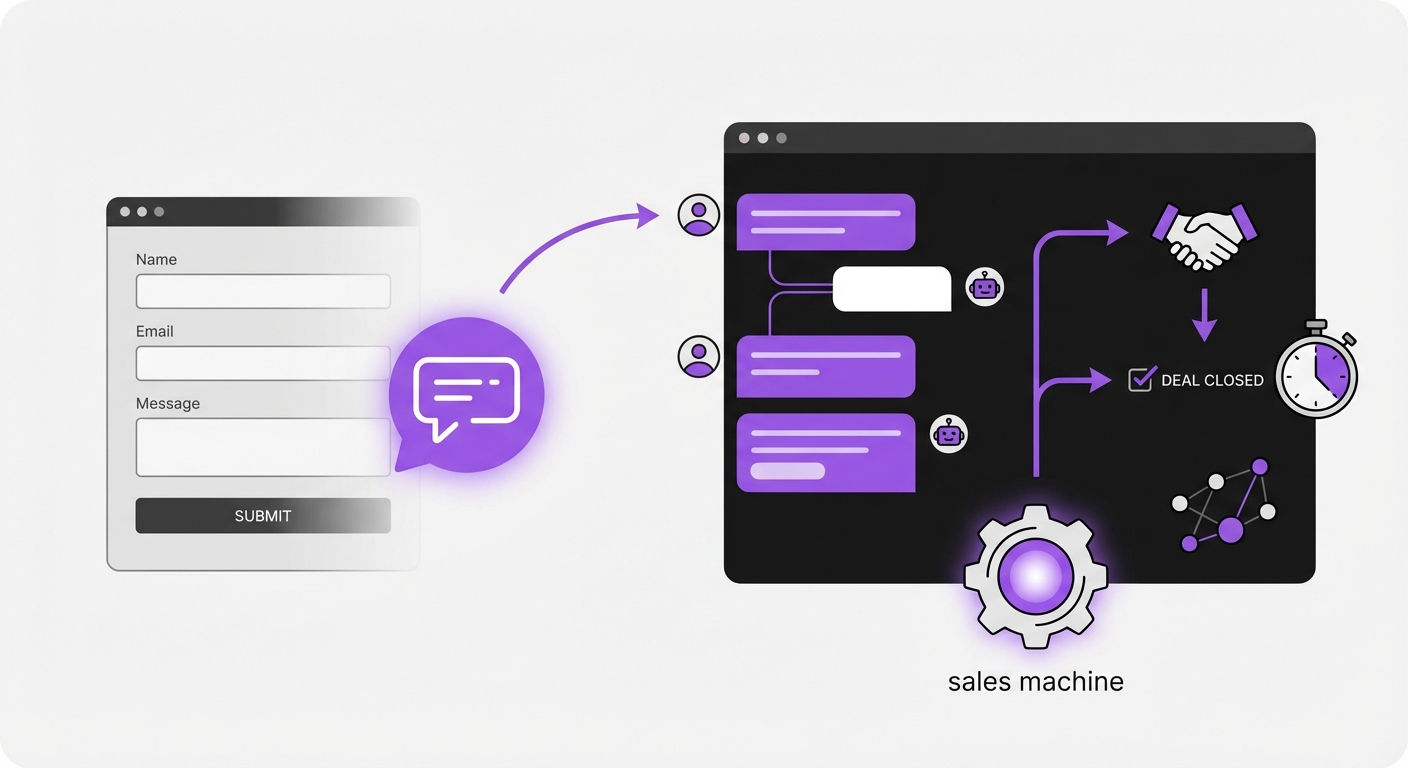
Drift has pioneered the category of conversational marketing and sales, and in 2026 it remains a top choice for B2B companies focused on revenue generation. Drift’s AI is expertly tuned to engage potential buyers, understand their intent, and connect them directly with the right salesperson in real time. It excels at personalizing interactions based on visitor data, such as company size or browsing behavior.Drift is less of a general-purpose support bot and more of a specialized sales machine. It helps businesses shorten their sales cycles by replacing static lead forms with interactive conversations that qualify and route leads 24/7. While it carries a premium price tag, for B2B companies where a single converted lead can be worth thousands, the ROI can be substantial. It’s the go-to solution for sales teams looking to turn their website into their best-performing sales rep.
Key Details
- Best For: B2B companies with a dedicated sales team focused on lead generation and accelerating the sales pipeline.
- Pricing: Premium subscription-based pricing, typically customized for each business. It is one of the more expensive options on the market.
- Pros: Best-in-class for B2B sales and lead generation, powerful personalization and targeting features, and strong integration with sales tools like Salesforce.
- Cons: Very expensive for most small businesses, and its primary focus on sales makes it less suitable for general customer support.
Choosing the Right AI Chatbot for Your Business
The right AI chatbot for small businesses ultimately depends on your unique goals, budget, and technical ecosystem. A B2B company focused on sales will have different needs than an e-commerce store aiming to reduce support tickets. As you evaluate your options, consider not just the features, but the total cost of ownership and ease of implementation.
For the millions of small businesses built on WordPress, a specialized solution like MxChat offers a compelling advantage with its seamless integration and lifetime pricing. By eliminating monthly fees and providing a powerful, no-code platform, it empowers businesses to deploy world-class AI support without breaking the bank. Whatever your choice, implementing an AI chatbot in 2026 is a strategic step toward a more efficient, responsive, and customer-centric future.
Running on WordPress? Read our WordPress chatbot plugin guide for plugin-specific recommendations.