How AI Enhances Customer Experience: A 2026 Guide
In 2026, the standard for customer service is no longer just high—it’s instantaneous, personalized, and available 24/7. Failing to meet these expectations means losing customers to competitors who can. This is precisely how AI enhances customer experience; it transforms your support from a reactive cost center into a proactive, revenue-driving asset. By automating responses and personalizing interactions at scale, AI allows you to deliver the world-class service modern consumers demand without overwhelming your human support team.
This guide provides a step-by-step framework for leveraging AI to create a superior customer experience (CX) on your website. Follow these steps to deploy an intelligent system that not only answers questions but also builds loyalty and drives growth.
Step 1: Identify Key Customer Touchpoints for AI Integration
Before you can deploy an AI agent, you must first understand where it will deliver the most value. A scattergun approach is inefficient; a strategic one yields immediate results. The goal is to identify high-impact areas where automation can resolve issues faster and free up your human team.
How to Pinpoint Your Priorities
- Analyze Support Tickets: Dive into your helpdesk data. Look for common, repetitive questions that consume a significant portion of your agents’ time. These are prime candidates for automation.
- Map the Customer Journey: Trace the path a typical user takes on your website, from their first visit to a post-purchase inquiry. Where do they get stuck? Common friction points include the pricing page, checkout process, or technical support sections.
- Review Website Analytics: Use tools like Google Analytics to see which pages have high traffic and high exit rates. An AI agent on these pages can proactively offer assistance, preventing users from leaving.
Step 2: Choose the Right AI Platform and Tools
The effectiveness of your AI strategy depends entirely on the technology powering it. In 2026, the market is filled with options, but not all are created equal. Your choice should align with your existing tech stack, your team’s technical skills, and your long-term business goals.
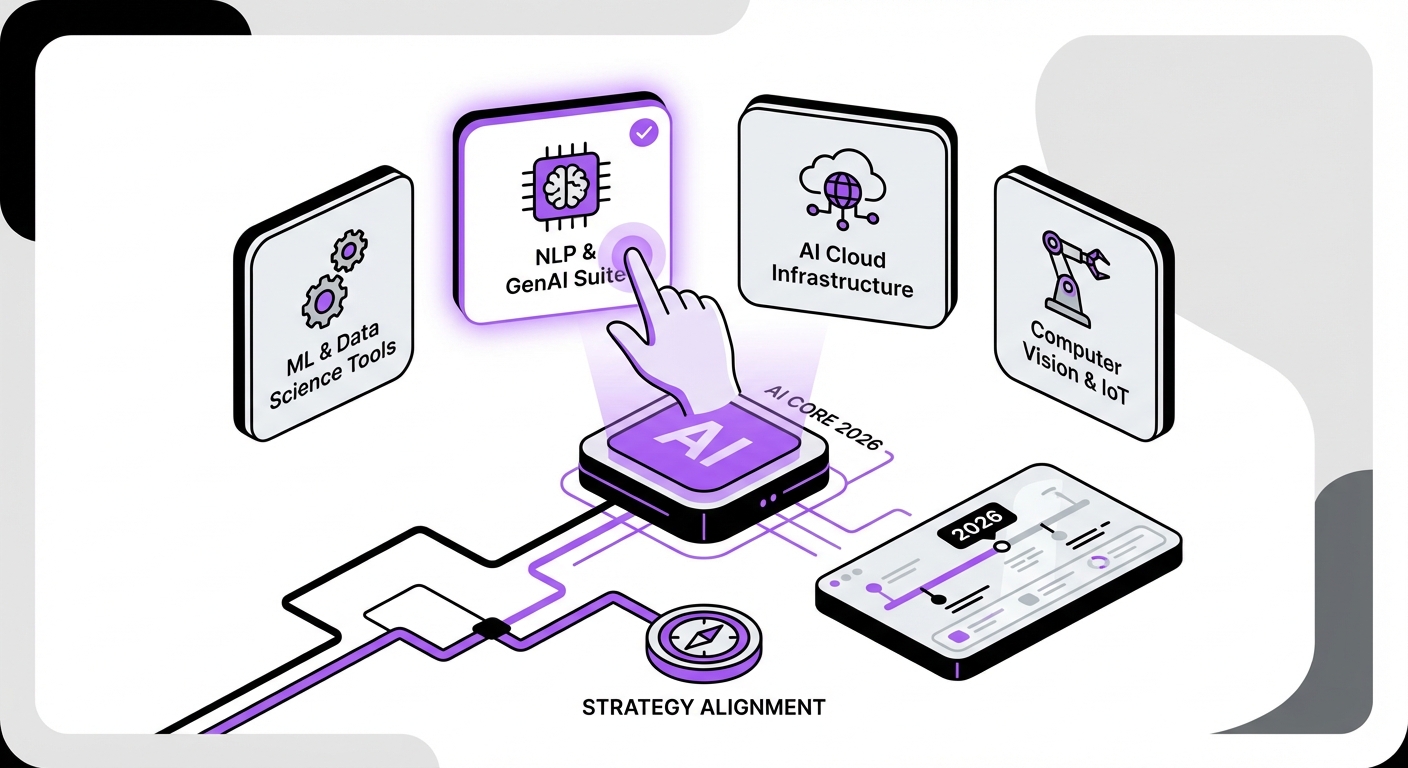
Key Factors for Selecting an AI Solution
- Seamless Integration: How well does the platform connect with your website? For the 43% of the web powered by WordPress, a native solution is critical. A tool that isn’t designed for your CMS can cause conflicts and poor performance.
- No-Code Interface: Unless you have a dedicated development team, a no-code platform is essential. It empowers your marketing or support teams to build, manage, and update the AI agent without writing a single line of code.
- Advanced AI Capabilities: Modern AI should go beyond simple keyword matching. Look for platforms that support advanced models and technologies like Retrieval-Augmented Generation (RAG). RAG allows the AI to pull precise, context-aware answers directly from your own knowledge base, ensuring brand consistency and accuracy.
Step 3: Train and Deploy Your AI Support Agent
An untrained AI is like a new employee on their first day—full of potential but lacking the specific knowledge to be effective. Proper training is the most critical step in ensuring your AI provides accurate, helpful, and brand-aligned responses.
Building Your AI’s Brain
- Create a Comprehensive Knowledge Base: This is the foundation of your AI’s intelligence. Compile all relevant documents, including FAQs, product manuals, shipping policies, troubleshooting guides, and even past support ticket resolutions.
- Define the AI’s Persona and Tone: Your AI is an extension of your brand. Decide if its personality should be professional, friendly, witty, or strictly informative. This ensures a consistent customer experience across all channels.
- Establish Clear Escalation Paths: This is non-negotiable. The AI must be programmed to recognize when a query is too complex, sensitive, or emotionally charged. At that point, it should offer a seamless handoff to a human agent without frustrating the customer.
Step 4: Personalize the Customer Journey with AI
Generic, one-size-fits-all interactions are a relic of the past. The true power of how AI enhances customer experience lies in its ability to deliver personalized engagement at scale. By connecting with your user data, AI can tailor every conversation to the individual’s needs and history.
Methods for AI-Powered Personalization
- Proactive Engagement: Use AI to monitor user behavior in real-time. If a customer is lingering on the checkout page for several minutes, the AI can proactively ask, “Do you have any questions about your order?”
- Personalized Recommendations: By integrating with your CRM or e-commerce platform, the AI can access a customer’s purchase history. This allows it to offer relevant product recommendations or upsells, such as, “Hi John, I see you recently bought our X-1 Drone. Would you be interested in our extended-life battery pack for it?”
- Context-Aware Support: An advanced AI agent will remember past conversations. A returning customer can be greeted by name and can pick up a support query right where they left off, without having to repeat themselves.
Step 5: Monitor, Analyze, and Continuously Iterate
Launching your AI agent is the beginning, not the end. The digital landscape and customer expectations are constantly evolving, and your AI strategy must evolve with them. Continuous monitoring and improvement are key to long-term success.
The Cycle of AI Improvement
- Track Key Performance Indicators (KPIs): Regularly review metrics like first-contact resolution rate, customer satisfaction (CSAT) scores, and escalation frequency. These numbers will tell you what’s working and what isn’t.
- Analyze Conversation Transcripts: Periodically read through the AI’s chat logs. Pay close attention to conversations that were escalated or received a low satisfaction rating. These transcripts are a goldmine for identifying knowledge gaps.
- Refine the Knowledge Base: When you discover a question the AI couldn’t answer, add that information to its knowledge base. This iterative process makes the AI smarter and more capable with every interaction.
Common Mistakes to Avoid When Using AI for Customer Service
Implementing AI can be transformative, but common pitfalls can undermine its effectiveness. Be sure to avoid these mistakes:
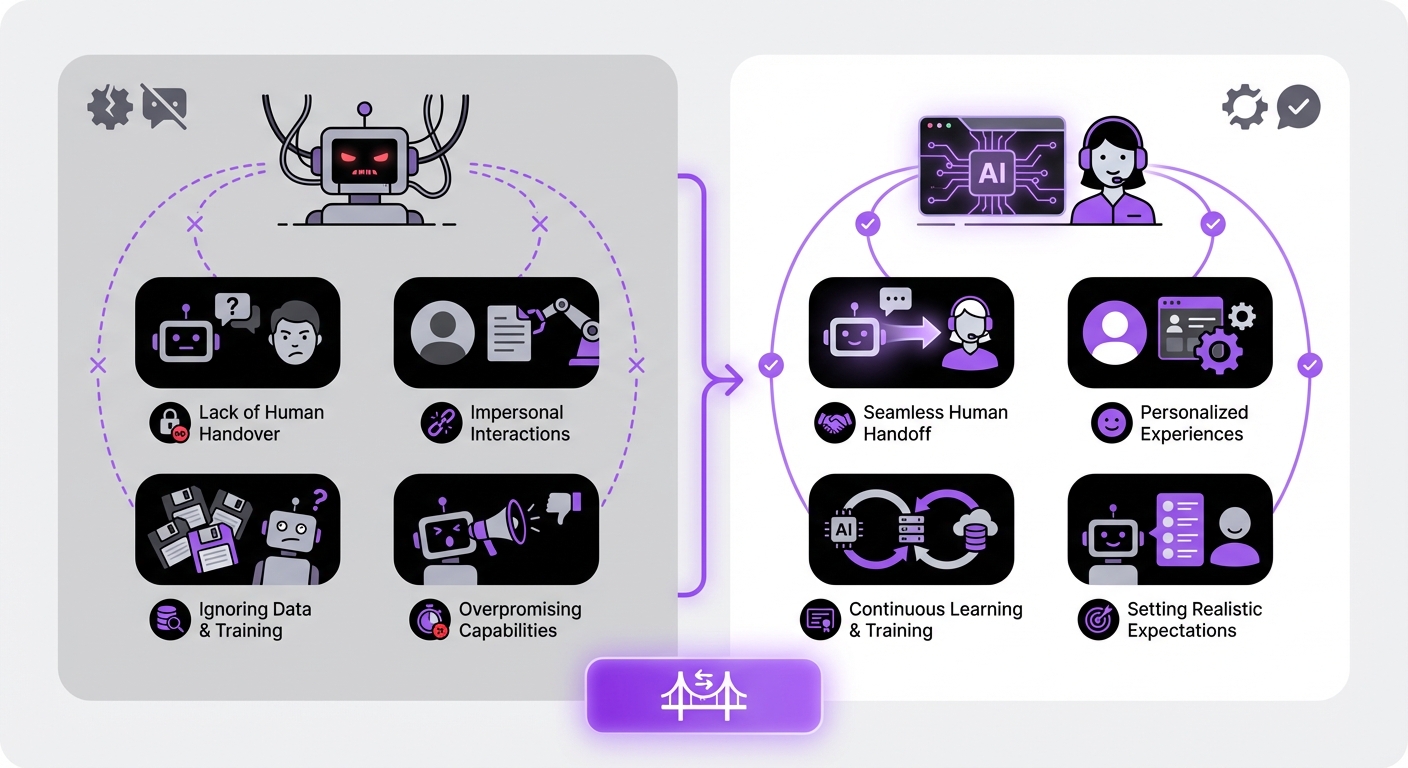
- Hiding Human Support: AI should augment your team, not replace it entirely. Always provide a clear and easy way for customers to connect with a human agent.
- Using an Outdated Knowledge Base: An AI running on old information will provide incorrect answers, leading to customer frustration and mistrust.
- Ignoring Your Brand Voice: A generic, robotic-sounding AI can feel impersonal and off-brand. Ensure its persona aligns with your company’s identity.
- Forgetting to Analyze and Improve: A “set it and forget it” mentality will lead to stagnant performance. AI requires ongoing refinement to remain effective.
Expected Outcomes: The ROI of an AI-Powered CX Strategy
When implemented correctly, an AI-driven approach to customer experience delivers tangible business results. You can expect to see:
- Improved Customer Satisfaction: 24/7, instant access to accurate information leads to happier, more loyal customers.
- Reduced Operational Costs: Automating up to 80% of routine inquiries frees up your human agents to focus on high-value, complex issues.
- Increased Sales and Conversions: Proactive, personalized engagement can guide users through the sales funnel and recover potentially lost sales.
- Actionable Customer Insights: Chat logs provide unfiltered data on what your customers want, their pain points, and their objections, informing your product and marketing strategies.