Chatbots for Marketing: Boost Engagement and Sales
At its core, a marketing chatbot is an automated assistant, built with either AI or a set of rules, designed to handle marketing tasks. It engages visitors in real time and helps steer them toward a purchase.
Think of it as having a 24/7 digital sales team right on your website. It transforms a static webpage into a dynamic, conversational hub that captures leads and fuels growth, even while you sleep.
Why Chatbots Are Changing the Game in Modern Marketing
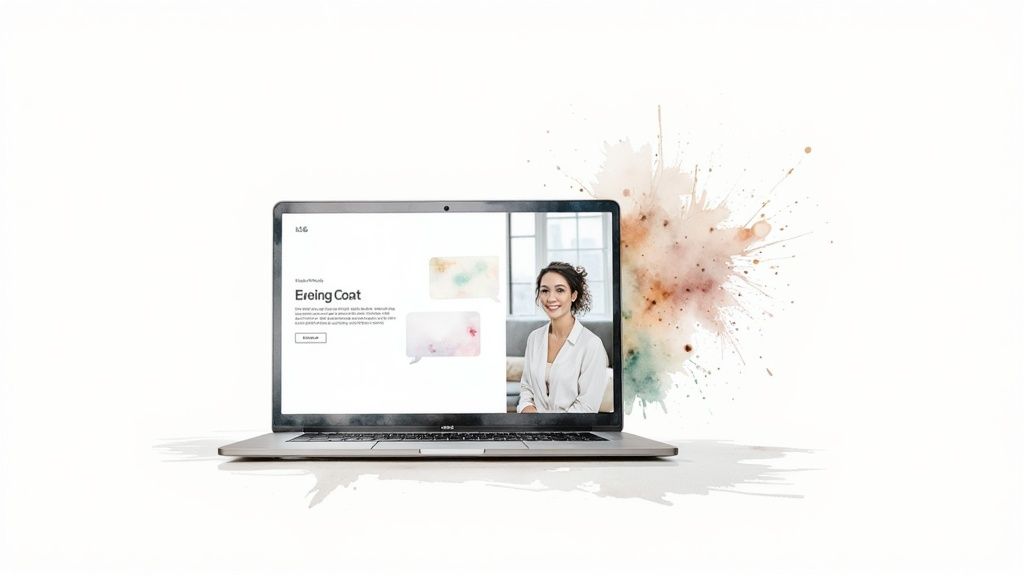
Picture your website evolving from a silent, digital brochure into an ever-present sales consultant. That's the fundamental change chatbots bring to marketing. For years, marketing felt a lot like shouting into a crowd—you'd send a message out and just hope the right people were listening.
But today's customers expect a conversation. They want immediate answers and recommendations that feel like they were made just for them. This is precisely where chatbots shine, shifting the dynamic from a one-way message blast to thousands of simultaneous, one-on-one conversations.
The Move Toward Conversational Experiences
The path a customer takes is rarely a straight line anymore. People land on your site with completely different questions, needs, and buying intentions. A standard website gives everyone the same passive experience, but a chatbot can adapt on the fly.
It acts like a digital concierge, greeting visitors the moment they arrive. This immediate engagement is critical. We know that businesses responding within the first five minutes are far more likely to qualify a lead. A chatbot ensures you never miss that window, day or night. This ability to offer instant, personal guidance is a big reason why various chatbot companies are revolutionizing customer interaction across so many fields.
It's More Than Just Answering Questions
While instant support is a huge plus, the real power of a marketing chatbot runs much deeper. These are serious tools for building relationships and hitting your business goals.
A chatbot-driven strategy is like having a personal conversation with every single visitor. It moves marketing from broadcasting a message to building individual connections at scale, turning passive browsing into active engagement.
This personal touch has a direct effect on your revenue. By actively talking with your visitors, chatbots can:
- Capture and Qualify Leads: They ask smart questions to pinpoint serious prospects, gather their contact details, and hand them off smoothly to your sales team.
- Guide the Buying Journey: A chatbot can suggest the right products, offer helpful content, and handle common objections, nurturing potential customers until they're ready to buy.
- Boost Visitor Engagement: An interactive chat keeps people on your site longer. This lowers your bounce rate and creates a much more memorable experience with your brand.
In the end, adding a chatbot isn't just about plugging in a new piece of tech. It’s about completely rethinking how you talk to your audience. It's about meeting them where they are with the fast, helpful, and personal conversations they’ve come to expect.
How Marketing Chatbots Actually Work
So, how do these marketing chatbots do what they do? Let's pop the hood and see what makes them tick. No complex engineering degree required, I promise.
At its heart, chatbot technology splits into two main camps. Think of them as two different kinds of employees you could hire for your website.
First up, you have the rule-based chatbot. Picture this one as a super-efficient employee who follows a script perfectly every single time. It works like a digital phone tree or one of those "choose your own adventure" books. The bot gives a visitor a few options, and depending on what they click, it follows a pre-planned path to spit out the right answer.
These bots are workhorses for simple, predictable jobs. They're brilliant for handling basic FAQs, booking demos, or getting a visitor to the right sales rep. They just follow the map you give them.
The Two Engines of Conversation
Then you've got the second, more sophisticated type: the AI-powered chatbot. This isn't just a script-follower; this is your star team member who can think on their feet. Instead of being locked into a flowchart, it uses some seriously smart tech to understand what people are really asking, no matter how they phrase it.
This is where you hear terms like Natural Language Processing (NLP). NLP is basically the chatbot's brain. It’s what lets the bot figure out the meaning behind a customer's typed-out thoughts, even with typos, slang, or half-finished sentences.
It's this ability to understand context and actually learn from conversations that sets AI chatbots apart. They can handle curveball questions, suggest products someone might love, and create a back-and-forth that feels genuinely helpful, not robotic.
This knack for adapting is what makes AI chatbots such a game-changer for marketing. They don't just provide answers; they build a connection. This is also the technology behind more advanced tools, like a vector embedding chatbot for WordPress, which can grasp the underlying meaning of a question to deliver incredibly precise information.
Rule-Based vs AI-Powered Chatbots: A Marketer's Comparison
So, which one is right for you? It really boils down to what you're trying to accomplish. Neither is "better"—they're just different tools for different marketing jobs. To help you decide, here’s a quick side-by-side look.
| Feature | Rule-Based Chatbot (The Script Follower) | AI-Powered Chatbot (The Smart Assistant) |
|---|---|---|
| Conversation Style | Structured, follows predefined paths with buttons or keyword triggers. | Flexible, understands open-ended questions and natural language. |
| Complexity | Simple to set up and manage, ideal for specific, repetitive tasks. | More complex, requires training data but can handle a wide range of queries. |
| Best For | FAQ automation, appointment booking, basic lead qualification. | Personalized shopping, complex support, dynamic lead nurturing. |
| User Experience | Predictable and consistent, but can be limiting for users. | Highly engaging and personal, adapts to the user's needs. |
Choosing the right bot is about matching the technology to the task. For quick wins and simple processes, a rule-based bot is a solid choice. But for creating a truly dynamic and personalized customer experience, AI is the way to go.
The Dominance of AI Models
The AI engines behind these smart assistants are evolving at a breakneck pace. While the field is packed with players, a few giants have clearly taken the lead. As of September 2025, ChatGPT commands a massive 81.13% market share among AI chatbots globally. Others, like Perplexity and Microsoft Copilot, are also major contenders.
What's really telling is the explosion of AI startups, which is now 14 times higher than it was back in 2000. This fierce competition is great news for marketers because it means the tools are only going to get smarter, cheaper, and easier to use. You can dig deeper into the AI chatbot market share and its leaders to see the trends for yourself.
This constant innovation guarantees that chatbots aren't just a passing fad—they're a core piece of modern marketing strategy. Knowing the difference between a simple script-follower and a smart assistant is the first step to putting them to work for your business.
What Marketing Chatbots Can Actually Do for Your Business
Okay, so we know what chatbots are. But the real question is, what's in it for you? What kind of actual, measurable results can you expect? The benefits here aren't just about adding a neat gadget to your website; they represent a smarter way to connect with customers and boost your bottom line.
Think about it. A potential lead lands on your site at 2 AM on a Saturday. Without a chatbot, that lead is probably gone forever. With one, you have a digital assistant ready to engage, answer questions, and capture their information. That's the power of 24/7 lead generation—you never miss an opportunity, no matter the time of day.
This always-on presence naturally leads to higher conversion rates. A chatbot can step in the second a visitor shows interest, guiding them before they have a chance to get frustrated and click away. It can ask a few smart questions, figure out who's just browsing and who's a serious buyer, and then hand off the hot leads directly to your sales team.
Let Your Team Focus on What Matters
One of the first things you'll notice is how much time a chatbot frees up for your team. Your best people shouldn't be spending their days answering the same five questions over and over. Let a chatbot handle that.
By automating the routine stuff, your team can finally concentrate on the high-value work:
- Nurturing complex deals that need a human touch.
- Crafting big-picture marketing strategies.
- Building real relationships with your most important customers.
It’s like having an incredibly efficient intern who handles all the repetitive tasks, allowing your experts to focus their brainpower on activities that actually make money. This not only saves you a ton in operational costs but also keeps your team engaged and motivated.
The numbers back this up. The global chatbot market is expected to rocket to $46.64 billion by 2029. Businesses are on track to save a staggering $11 billion and almost 2.5 billion work hours through this kind of automation. And with 40% of millennials already chatting with bots daily, it's clear this isn't a fad. You can dive deeper into the chatbot market growth at Exploding Topics.
This infographic gives you a sense of the major AI models that are the brains behind today's most effective chatbots.
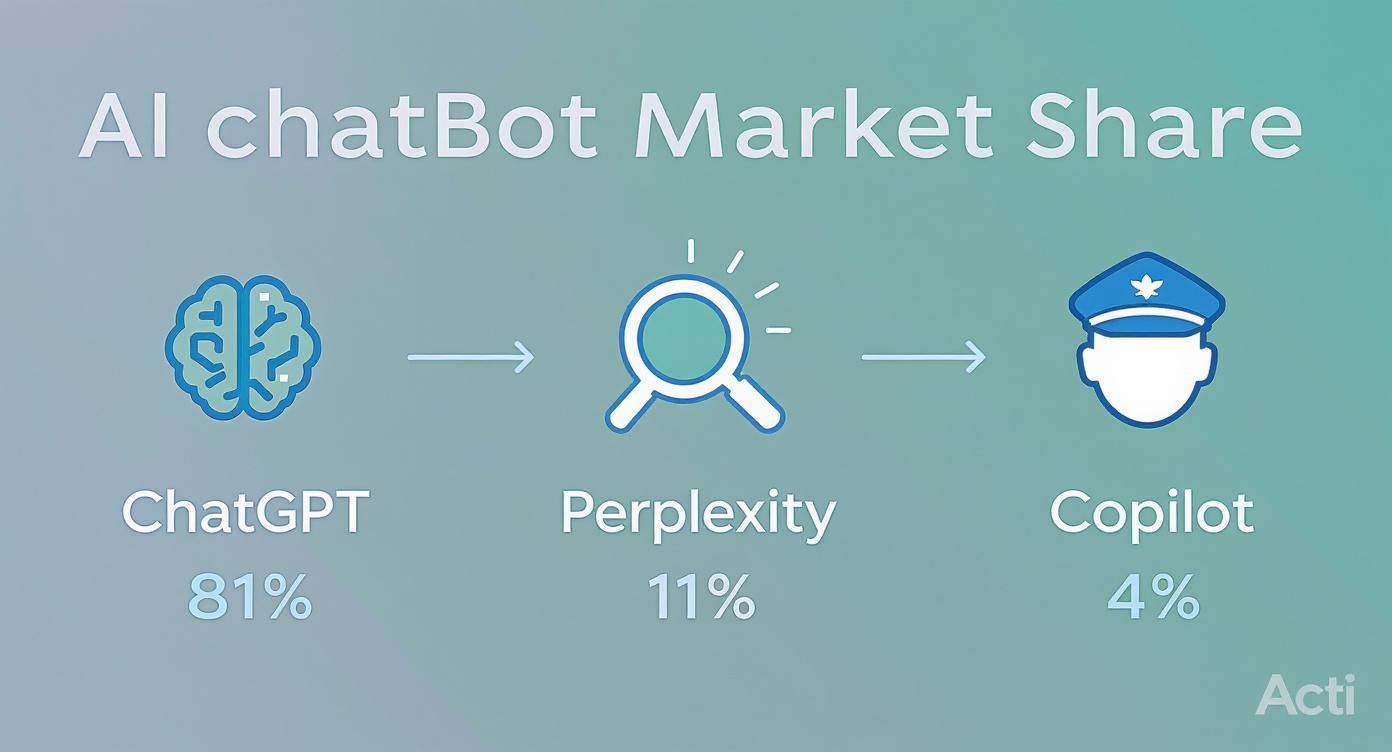
As you can see, ChatGPT has a commanding lead, which really drives home how important it is to pick a tool that uses a powerful and proven AI engine.
Finally, Personalization That Actually Scales
For years, we've all been chasing the dream of true one-to-one marketing, but doing it for thousands of customers has been next to impossible. Chatbots make it possible. By looking at a visitor's on-site behavior, past chats, and current questions, a chatbot can serve up incredibly relevant content and recommendations.
A chatbot gives every single visitor the experience of having a personal sales assistant. It makes one-to-one marketing a practical reality for any business, building the kind of trust that turns visitors into customers.
Imagine an e-commerce bot that acts as a personal shopper, suggesting products a customer will love. Or for a B2B service, a bot that instantly provides the most relevant case study for a prospect's specific industry. This is the kind of tailored experience that makes people feel seen and understood, and that's what builds loyalty.
Real-World Chatbot Strategies That Drive Growth
Knowing what a marketing chatbot is and seeing what it can do are two different things. This is where the magic really happens. Forget the dry feature lists for a moment and let's look at the specific, powerful ways businesses are using chatbots right now to connect with visitors and turn them into fans.
These aren't just pie-in-the-sky ideas. They're practical, proven tactics you can put to work in your own marketing. Each one targets a different part of the customer journey, from that first "hello" all the way to post-purchase support.
Proactively Qualify Your Leads
Picture a salesperson who can greet every single person walking through your door, ask the perfect questions to understand their needs, and instantly tell the serious buyers from the window shoppers. That's a chatbot in a nutshell. Instead of waiting passively for someone to fill out a "Contact Us" form, the chatbot starts the conversation.
It can jump right in with targeted questions like:
- "Are you looking for a solution for yourself or for a team?"
- "What's the biggest challenge you're dealing with in [your industry] right now?"
- "What's your budget looking like for this project?"
Based on the answers, the bot gets smart. It can route high-value leads straight to a live sales agent for an immediate conversation. For those who aren't quite ready, it can offer a relevant case study or add them to a nurturing email sequence. This whole process ensures your sales team invests their time talking to the people most likely to become customers.
Act as a Personalized Shopping Assistant
In the world of e-commerce, a chatbot is the ultimate shopping sidekick. It blows a simple search bar out of the water by creating a guided, personal shopping experience that feels like it was made just for that user. Think of it as replicating the helpfulness of a great in-store associate, but at a massive scale.
Imagine a visitor lands on a clothing site looking for a new outfit. The chatbot can pop up and ask, "What's the occasion?" and then follow up with questions about style, color, and price. In just a few seconds, it can serve up a curated collection of products that hit the mark, making a sale far more likely.
This particular use of chatbots for marketing is a huge reason for the boom in e-commerce. Online retailers have been quick to adopt them, with chatbot-driven transactions projected to hit a staggering $142 billion globally by 2025. For bigger companies, the results are even more eye-popping, with some reporting average revenue bumps of $823 million over three years. The trend is clear, as 1 in 5 consumers now say they'd consider buying something directly through a chatbot. You can dig into more of the numbers with these chatbot adoption statistics and their impact on sales.
Automate the Customer Onboarding Process
That first experience with your product is everything. A chatbot can serve as a friendly guide for new customers, walking them through the initial setup of a product or service one step at a time. This automated onboarding makes sure every new user feels confident and supported right from the get-go.
Instead of sending people off to a dense help document, the bot breaks the process down into bite-sized chunks right inside the chat window. It can use a mix of text, GIFs, and short video clips to explain key features, field common first-time questions, and even celebrate small wins as the user makes progress.
This conversational approach to onboarding smooths out the initial learning curve, helping users get to that "aha!" moment with your product much faster. It's a brilliant way to boost engagement early on and stop customer churn before it even starts.
Drive More Event Registrations
Got a webinar, workshop, or conference coming up? A chatbot can be your secret weapon for promotion. By placing a dedicated bot on your event landing page, you can seriously boost sign-ups by giving people instant answers and removing any friction.
People always have those last-minute questions about the agenda, speakers, or how to connect. A chatbot can handle these FAQs 24/7, making sure you don't lose a potential attendee just because they couldn't find a quick answer.
On top of that, it can:
- Capture Registrations: The bot can grab names and email addresses directly in the chat, making the sign-up flow incredibly simple.
- Send Timely Reminders: Once someone registers, the bot can be set up to send helpful reminders as the event gets closer.
- Gather Pre-Event Feedback: It can ask registrants what they hope to learn, giving you valuable intel to tailor your content.
Gather Customer Feedback Conversationally
Finally, chatbots can turn the chore of collecting feedback into an actual conversation. Let's be honest, traditional surveys can feel impersonal and often get ignored. A chatbot, on the other hand, can ask for feedback in a way that feels natural and interactive.
For instance, after a customer makes a purchase or finishes a support chat, a bot can pop up with a simple, "On a scale of 1-5, how did we do today?" Depending on their rating, it can ask a relevant follow-up. This approach feels less intrusive and often gets you more thoughtful, honest responses—goldmines of insight you can use to make your business better.
How to Implement Your First Marketing Chatbot
Ready to get your hands dirty? Building your first marketing chatbot is a lot less intimidating than it sounds, especially with today's tools designed for platforms like WordPress. Forget needing a degree in computer science; if you can navigate WordPress, you can launch a powerful conversational assistant.
The trick is to have a solid game plan. We’ll walk through the process using a tool like MxChat, breaking it down into simple, bite-sized steps. Think of it less like engineering a car from raw metal and more like putting together a high-end Lego kit—all the complex bits are already figured out for you.
Step 1: Install and Activate the Plugin
Everything starts right from your WordPress dashboard. The first move is to install your chatbot plugin of choice. With MxChat, for example, the process is exactly the same as adding any other plugin you’ve used before.
Once it's installed, you just need to activate it. That one click weaves the chatbot’s framework into your website, getting it ready for the fun part: customization. This whole foundational step usually takes less than five minutes, but it sets the stage for everything that follows.
Step 2: Customize Your Chatbot’s Appearance and Personality
This is where you inject your brand’s character into the bot. A generic, faceless assistant isn't going to win anyone over. To make it feel like a true part of your team, you'll want to focus on two things:
- Visual Customization: Tweak the colors of the chat widget to perfectly match your site’s design. You can also pop your company logo into the header for a polished, professional look that feels completely integrated.
- Personality and Tone: Decide how you want your bot to sound. Is it fun and friendly, or more buttoned-up and professional? Give it a name, craft a warm welcome message, and define its core personality so every interaction feels authentic.
Getting this right ensures your chatbots for marketing feel like a helpful colleague, not just a clunky piece of software. A bot with a bit of personality can make a world of difference in how users engage with it.
Think of your chatbot's persona as its "voice." Just as your brand has a specific tone in its copy and design, your chatbot should speak the same language. This consistency builds trust and makes the user experience feel cohesive.
After you've nailed the look and feel, it’s time to build out the most important part: the conversation itself. For a deeper dive into the setup process, check out this comprehensive guide on how to implement a WordPress AI chatbot with MxChat.
Step 3: Design Your First Conversation Flow
A conversation flow is just the map your chatbot follows to guide a user toward a goal. When you're just starting, it's smart to pick one clear, simple objective. Let's say your goal is lead generation.
The aim is to identify a potential customer and get their contact details. A simple, effective flow would look something like this:
- The Opener: The bot starts with a friendly greeting, like, "Hi there! Looking for ways to boost your marketing? I can point you in the right direction."
- A Simple Question: It then asks something to qualify the visitor's interest. For instance, "Are you more focused on generating leads or improving customer support right now?"
- The Value Offer: Based on the answer, the bot offers a helping hand. If they said "generating leads," it might reply, "Awesome! We have a free guide on that. Can I email it over to you?"
- The Ask: Finally, it asks for their email address to send the guide. And just like that, you've captured a new lead.
This straightforward, goal-focused approach works wonders. The best part is that modern chatbot builders have visual, drag-and-drop editors that make mapping out these conversations incredibly easy, no coding required.
Step 4: Set Smart Triggers and Integrations
The final piece of the puzzle is deciding when and where your chatbot shows up. You want it to be helpful, not annoying. Smart triggers give you that fine-tuned control.
You can program the chatbot to pop up:
- After a visitor has spent 30 seconds on a key page, like your pricing page.
- When someone shows "exit intent" by moving their mouse towards the 'X' button.
- Only on specific pages where it makes the most sense, like your blog or services pages.
Of course, capturing leads is only half the battle. You need a system to handle them. Integrating your chatbot with your CRM or email marketing platform is the final step. This connection automatically funnels every new lead straight into your marketing workflow for follow-up, closing the loop and making sure no opportunity is missed.
Best Practices for Optimizing Chatbot Performance
Getting your new marketing chatbot live is a fantastic first step, but the real work—and the real payoff—starts now. Don’t think of your bot as a finished product. Treat it like a new team member that needs consistent training to grow into a star performer.
A decent chatbot can answer questions. A great one becomes an engine for your entire marketing strategy. The trick is to ditch the "set it and forget it" mentality and embrace continuous, data-backed improvement. You’d be surprised how small, thoughtful adjustments can lead to huge wins in user engagement, lead quality, and overall customer happiness.
Give Your Bot a Distinct Personality
First impressions are everything, and a bland, robotic chatbot isn't going to win anyone over. The best chatbots feel like a natural extension of your brand's voice. Are you fun and a little quirky, or more straightforward and professional? Your bot should reflect that.
Give your chatbot a consistent persona by defining a few key traits:
- A memorable name that makes sense for your brand.
- A unique avatar or icon to give it a friendly face.
- A conversational style that mirrors the tone of your website and emails.
When the interaction feels authentic, people are more likely to stick around and have a real conversation. A bot with a bit of personality is far more engaging and effective.
Provide a Clear Path to Human Support
Let’s be honest: even the smartest AI has its limits. There's nothing more frustrating for a visitor than being stuck in a loop with a bot that just doesn't get it. That’s a quick way to lose a customer for good. Always, always provide an easy escape hatch.
Never make it hard for a user to reach a real person. An "escalate to human" option is a trust-builder. It shows you're there to solve their problem, turning a potential moment of frustration into a positive brand experience.
This can be as simple as a button that says "Chat with an Agent" or an automatic trigger that offers live support after the bot misunderstands a question a couple of times. This safety net is absolutely crucial for keeping the user experience positive.
Continuously Test and Refine
You can't improve what you don't measure. Instead of guessing what works, let your data be your guide. A/B testing is your best friend here—try out different welcome messages, question phrasing, or calls-to-action to see which ones perform better.
Your chat transcripts are a goldmine. Dig into them to find common questions, see where people get stuck, and identify your customers' biggest pain points. Use those insights to tighten up your bot's scripts and expand its knowledge. For a deeper dive, check out our guide on chatbot testing to boost engagement and user satisfaction. This cycle of reviewing, testing, and tweaking is what turns a basic bot into a high-powered marketing tool.
Your Top Questions About Marketing Chatbots, Answered
As more and more businesses start using chatbots in their marketing, some common questions naturally pop up. Let's walk through the answers to clear things up and help you move forward with confidence.
How Do I Actually Measure Chatbot ROI?
It’s tempting to just look at cost savings, like fewer support tickets, but that's only a small piece of the puzzle. The real return on investment (ROI) for a marketing chatbot is written in your marketing and sales numbers.
To get a clear picture, you need to track the right metrics:
- Lead Conversion Rate: Out of all the people who chat with the bot, how many turn into a solid lead?
- Lead Quality Score: Is the bot bringing in better, more qualified leads compared to your other channels?
- Customer Satisfaction (CSAT): After the chat is over, are people actually happy with the experience? A simple survey can tell you.
- Sales Cycle Length: Are your chatbots helping to close deals faster?
When you track these specific numbers, you can draw a straight line from your chatbot’s activity to real revenue and happier customers. That's how you prove its worth.
Will a Chatbot Mess Up My Website's SEO?
This is a big one, and thankfully, it’s a myth. In reality, a well-designed chatbot can give your SEO a nice boost. Think about what search engines like Google want: they want to see that people who visit your site are finding what they need and sticking around.
A chatbot does exactly that. By offering instant answers and guidance, it keeps visitors on your page longer. This lowers your bounce rate and sends a strong signal to Google that your site is a valuable resource worth ranking higher.
So, instead of hurting your SEO, a good bot actually reinforces it by improving the user's experience.
What's the Real Cost of a Marketing Chatbot?
The price tag for a chatbot can swing pretty widely. It really depends on what you need.
On one end, you have simple, rule-based plugins for platforms like WordPress that are very budget-friendly, sometimes just a one-time fee. On the other end, you could have a completely custom-built AI powerhouse with complex integrations, which is obviously a much bigger investment. The trick is to find that sweet spot that matches your business goals with your budget.
Ready to put a smart AI assistant on your WordPress site—without the high cost or the technical headaches? MxChat gives you an intelligent, no-code solution to capture more leads, support customers around the clock, and boost your sales. Learn more and get started with MxChat today.