5 Best AI Chatbots for E-commerce in 2025
In the hyper-competitive e-commerce landscape of 2025, customer experience is no longer a luxury—it’s the primary battlefield. Shoppers expect instant answers, personalized recommendations, and 24/7 support. Meeting these demands with a human-only team is a direct path to burnout and unsustainable costs. This is where artificial intelligence steps in. To help you navigate this crucial investment, we’ve analyzed the market to find the best AI chatbot for e-commerce, focusing on platforms that deliver tangible results, from boosting sales to streamlining support.
Whether you’re running a boutique on WooCommerce or a large-scale retail operation, the right AI-powered assistant can transform your business. This list breaks down the top solutions available today, evaluating them on features, integration capabilities, and overall value.
1. MxChat: The Premier AI Agent for WordPress & WooCommerce
MxChat has rapidly emerged as a leading contender, specifically for the millions of businesses built on WordPress. Instead of a one-size-fits-all approach, it provides a deeply integrated, no-code solution that allows you to deploy intelligent customer support agents in minutes. This focus makes it an incredibly powerful tool for anyone within the WordPress ecosystem, from small business owners to large enterprises looking to leverage their existing website infrastructure.
What sets MxChat apart is its sophisticated yet user-friendly technology. It utilizes advanced Retrieval-Augmented Generation (RAG) to ensure the AI provides precise, context-aware responses based on your own knowledge base, product information, and documents. This minimizes hallucinations and builds customer trust. Furthermore, its seamless integration with WooCommerce turns it into a potent sales tool. The chatbot can handle product inquiries, guide users through the purchasing process, and provide post-purchase support, all without human intervention. The platform supports multiple AI models, giving you the flexibility to choose the engine that best suits your needs.
For businesses seeking a long-term, cost-effective solution, MxChat’s pricing is a significant advantage. It offers a lifetime access model, starting at a one-time payment of $69.97 for the Pro plan. This eliminates recurring monthly fees that can quickly add up with other platforms, making it an exceptionally valuable investment for growing e-commerce stores. With features like unlimited AI chatbots, form collection, and content moderation, MxChat provides a comprehensive and scalable AI support system tailored for WordPress.
Key Details:
- Best For: E-commerce stores and businesses using WordPress and WooCommerce.
- Pros: Native WordPress integration, no-code setup, advanced RAG technology for accuracy, lifetime pricing model, WooCommerce-specific features.
- Cons: Primarily focused on the WordPress ecosystem, so it may not be suitable for stores on other platforms like Shopify or BigCommerce.
2. Tidio: The All-in-One Customer Experience Suite
Tidio is a popular choice for e-commerce businesses that want more than just a chatbot. It’s a comprehensive customer experience platform that combines live chat, AI automation, and email marketing into a single, cohesive dashboard. Its user-friendly interface and visual chatbot builder make it accessible for merchants who want to set up automated flows without writing a single line of code.
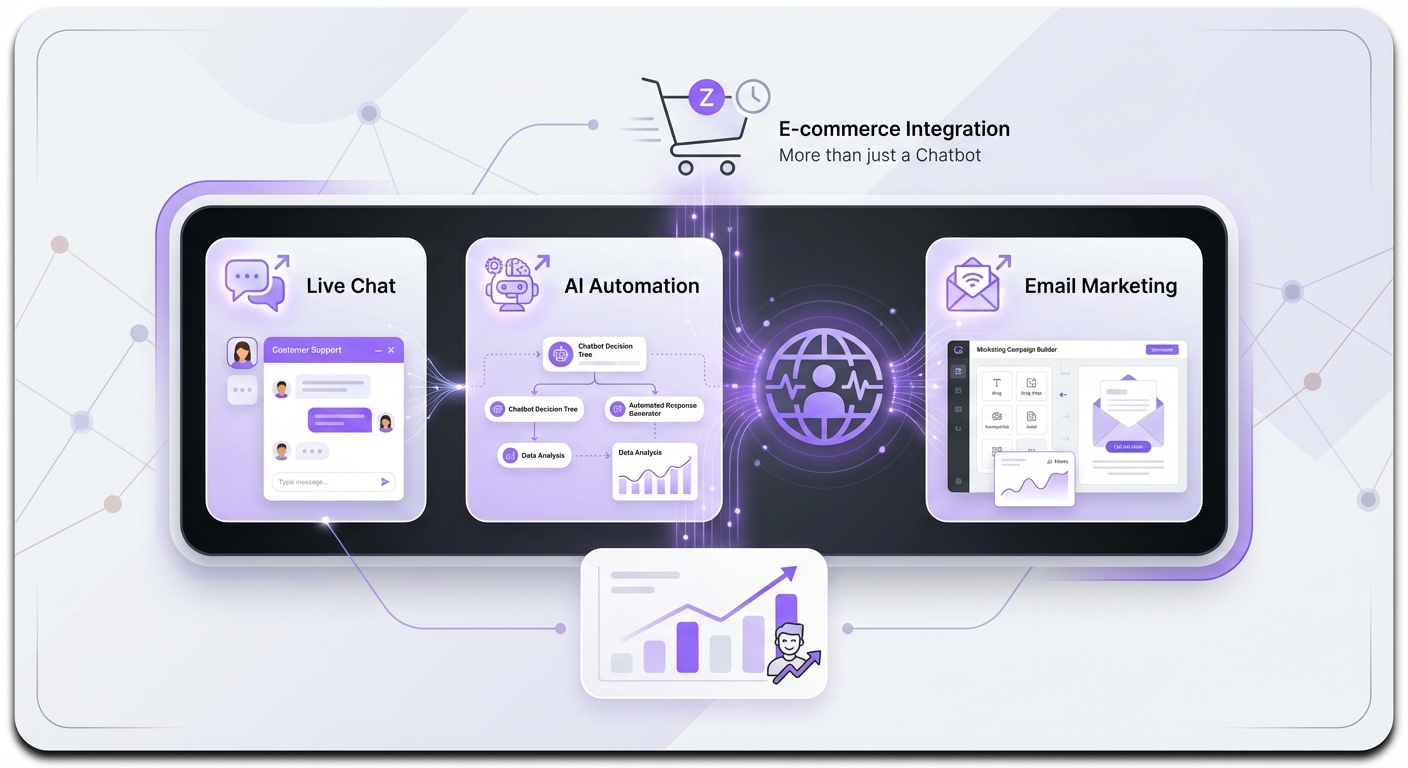
The core of Tidio’s AI is Lyro, a conversational AI that can learn from your FAQ pages and knowledge base in seconds to answer up to 70% of common customer questions. This frees up your support team to handle more complex issues. Tidio offers robust integrations with major e-commerce platforms, including Shopify, BigCommerce, and Wix, allowing it to pull product data, check order statuses, and offer personalized recommendations directly within the chat widget.
Tidio operates on a freemium model, which is great for new businesses looking to start with basic features. However, to unlock the full power of Lyro and other advanced automations, you’ll need to subscribe to one of their paid plans. While powerful, the costs can scale as your traffic and conversations increase, which is an important consideration for budget-conscious businesses.
Key Details:
- Best For: Small to medium-sized e-commerce businesses on various platforms seeking an all-in-one solution.
- Pros: Combines live chat, AI, and marketing; visual bot builder is easy to use; strong multi-platform integrations.
- Cons: AI-centric plans can become pricey; the free plan is quite limited.
3. Intercom: The Enterprise-Grade Conversational Platform
Intercom is a premium, enterprise-grade platform designed for businesses focused on building deep customer relationships through conversational experiences. It’s a powerhouse for support, engagement, and marketing, making it a top choice for larger e-commerce operations that need a scalable, data-driven solution. Its AI chatbot, Fin, is one of the most advanced on the market.
Fin is built on GPT-4 and can be trained on your company’s knowledge base, support articles, and even past conversations to provide accurate and human-like resolutions. It excels at understanding complex, multi-part questions and can seamlessly hand off conversations to the right human agent with full context when necessary. Intercom’s strength lies in its deep integration with your tech stack, allowing the chatbot to perform actions in other systems, like processing a refund or updating a customer’s subscription.
This level of power and sophistication comes at a significant cost. Intercom is one of the more expensive options on this list, with pricing tailored to larger teams and enterprises. For a small or mid-sized store, it might be overkill, but for a high-volume retailer looking for the best AI chatbot for e-commerce that can handle complexity at scale, Intercom is a formidable choice.
Key Details:
- Best For: Large-scale e-commerce businesses and enterprises needing a robust, all-encompassing conversational platform.
- Pros: Extremely powerful and accurate AI (Fin), deep CRM and data integrations, excellent for scaling support teams.
- Cons: High price point, can be complex to fully implement and manage.
4. Chatfuel: The Social Commerce & Sales Bot
While many chatbots focus on website-based support, Chatfuel carves out its niche by excelling at conversational commerce on social media platforms like Facebook Messenger and Instagram. For e-commerce brands with a strong social presence, Chatfuel can be a game-changer for driving sales and generating leads directly where their customers are most active.
The platform offers a no-code environment where you can build flows to answer product questions, qualify leads, and recover abandoned carts. Its AI capabilities, powered by GPT-4, allow it to understand user intent and provide natural, conversational responses. You can set up automated sequences that recommend products based on user preferences and even process orders directly within the chat, creating a seamless shopping experience without ever leaving the social app.
Chatfuel is an excellent tool for a specific use case: social commerce automation. While it can be deployed on a website, its core strengths and features are most potent on social media. Businesses looking for a more traditional, on-site customer support bot might find other options on this list more suitable. However, for boosting sales through social channels, Chatfuel is a leader.
Key Details:
- Best For: E-commerce brands that heavily leverage Facebook and Instagram for sales and marketing.
- Pros: Superb for social commerce, strong lead generation and sales automation features, easy-to-use no-code builder.
- Cons: Less focused on traditional website customer support; analytics could be more in-depth.
5. Drift: The Conversational Sales & Marketing Platform
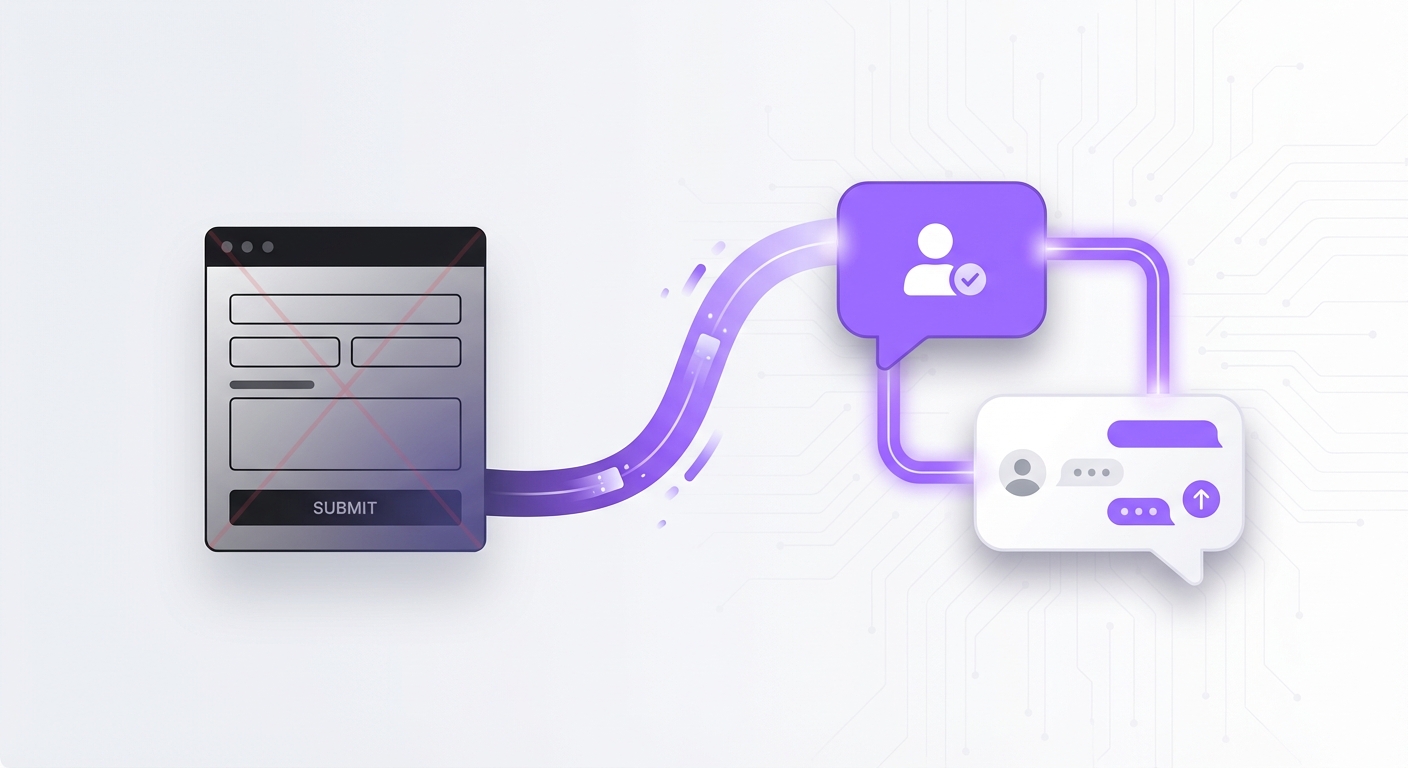
Drift pioneered the category of conversational marketing and remains a dominant force, especially for B2B and high-value B2C e-commerce. Its core philosophy is to replace static lead forms with real-time conversations that engage, qualify, and convert visitors while they are live on your site. Drift’s AI is finely tuned to identify high-intent buyers and connect them instantly with sales representatives.
For e-commerce, Drift is most effective for stores selling high-consideration products, such as custom furniture, luxury goods, or complex equipment. The AI can ask qualifying questions, understand the visitor’s needs, and either provide them with relevant information or book a sales call on the spot. It excels at personalizing the user journey, using data like traffic source, visitor behavior, and company information to tailor conversations.
Like Intercom, Drift is a premium solution with a price tag to match. It’s an investment in a sales-acceleration machine rather than just a support tool. For most standard e-commerce stores, its feature set may be too sales-focused and expensive. But for businesses where a consultative sales process is key, Drift offers an unparalleled AI-driven experience.
Key Details:
- Best For: High-ticket B2C and B2B e-commerce companies focused on lead generation and sales acceleration.
- Pros: Best-in-class for real-time lead qualification, powerful personalization and targeting, deep integrations with CRM platforms like Salesforce.
- Cons: Very expensive, primarily sales-focused, may be overly complex for standard support needs.
How to Choose the Right AI Chatbot for Your Store
Selecting the perfect AI chatbot involves looking beyond features and considering your unique business needs. Here are a few key factors to guide your decision:
### Platform Integration
Your chatbot must work seamlessly with your e-commerce platform. If you’re on WordPress, a native solution like MxChat will offer deeper and more reliable integration with WooCommerce than a platform-agnostic tool.### Primary Goal
What is your main objective? If it’s to automate customer support and reduce ticket volume, a tool with strong knowledge base integration is key. If your goal is to drive sales, look for features like proactive messaging, lead qualification, and abandoned cart recovery.### Budget and Scalability
Consider both the initial cost and the long-term expense. A subscription model might seem affordable initially but can become costly as your business grows. A lifetime deal, like that offered by MxChat, can provide significant long-term value and predictable costs.Conclusion
In 2025, an AI chatbot is no longer an optional add-on; it’s a core component of a successful e-commerce strategy. The right tool can elevate your customer service, recover lost sales, and provide invaluable insights into your customers’ needs. The best AI chatbot for e-commerce is ultimately the one that aligns with your platform, budget, and business goals.
While powerful enterprise solutions like Intercom and Drift have their place, the modern e-commerce landscape demands accessible, powerful, and integrated tools. For the vast number of businesses powered by WordPress, MxChat presents a compelling, cost-effective, and feature-rich solution specifically designed to enhance customer support and drive sales within their native ecosystem. We highly recommend evaluating its features to see how it can transform your customer interactions.